

Want top-quality seafood in Dubai? Here's what you need to know:
- Dubai handles over 100,000 tonnes of seafood annually, with 200 tonnes processed daily at its markets.
- Heat can spoil seafood quickly, with poor handling causing a 15% loss, worth AED 100 million yearly.
- To ensure quality, use your senses:
- Sight: Bright, bulging eyes, shiny scales, and red gills.
- Smell: Clean, mild ocean scent - avoid strong, unpleasant odors.
- Touch: Firm texture; fillets should not feel overly wet.
- Seasonal seafood (November–May) like Hammour, Kingfish, and Sultan Ibrahim offers better taste and supports responsible fishing.
- Look for certifications like MSC for wild-caught or ASC for farmed seafood to guarantee traceable and responsibly sourced products.
- Premium suppliers like Fin & Bone provide traceable seafood with weekly deliveries from Japan (Tuesdays) and the UK (Thursdays).
Pro Tip: Use QR codes and ask vendors about sourcing details for added confidence. Whether shopping at bustling fish markets or premium suppliers, knowing how to assess quality ensures a better dining experience.
How to Check Seafood Freshness Using Your Senses
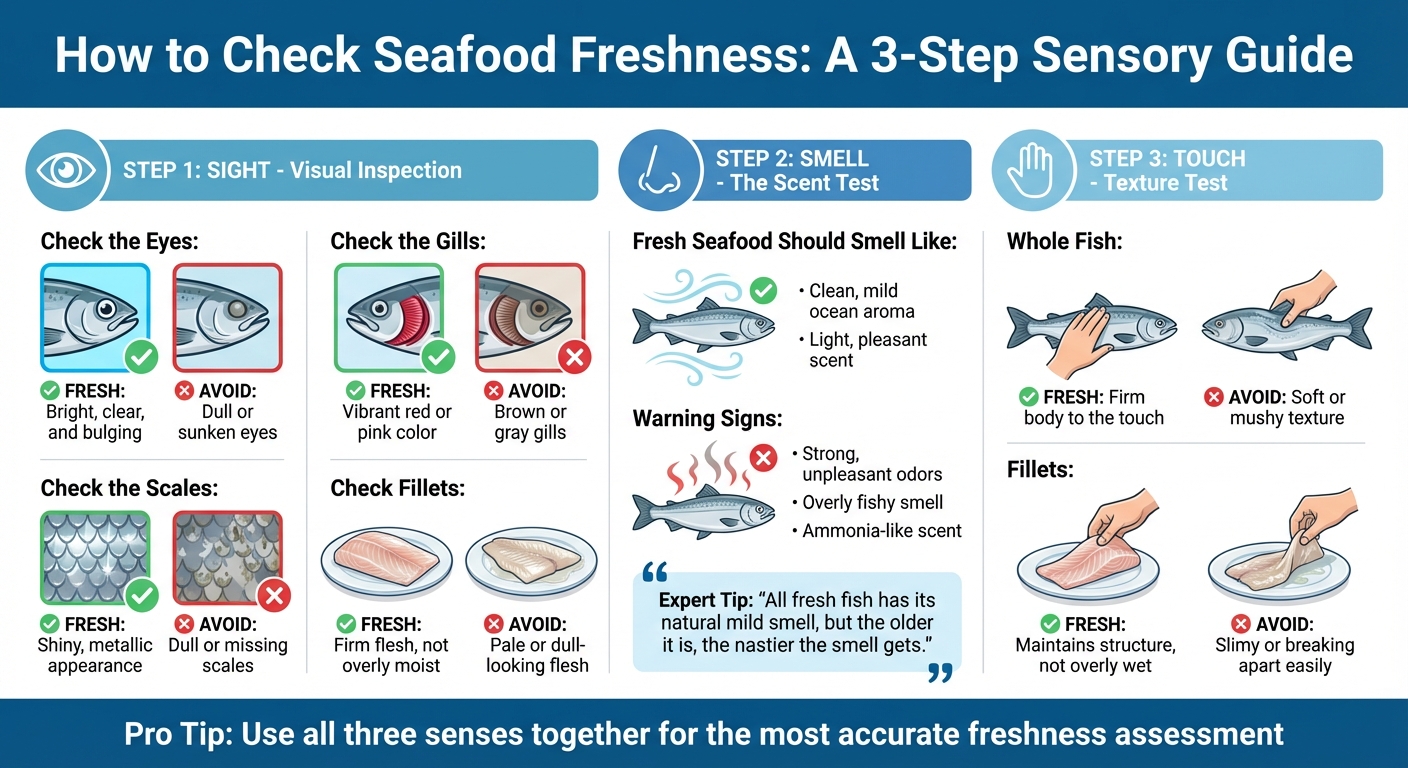
How to Check Seafood Freshness: Visual Guide to Sight, Smell, and Touch Tests
In Dubai's bustling seafood markets, ensuring freshness is more than just a habit - it's a reflection of the city's commitment to traceable and high-quality sourcing. Using your senses - sight, smell, and touch - is the most reliable way to assess the freshness of seafood. Also, keep an eye out for vendors displaying clear tags with the fish's name, price, and source information.
What to Look For: Visual Signs of Freshness
Start with the eyes. Fresh fish will have bright, clear, and bulging eyes. As Abdul Latif Mohammad Al Marzouqi, Senior Manager of the Consumer Protection Division at Dubai's DED, points out:
The eyes have to be bright and bulging. Dullness in the eyes suggests it has stayed out of water for some time.
Next, inspect the gills and scales. The gills should be a vibrant red or pink, while the scales should have a shiny, metallic look. Mohammad Amjad, a vendor at Deira Fish Market, emphasises:
Bright red or pink gills indicate the fish is fresh, and the scales have to be shiny like metal.
When examining cut fish or fillets, the flesh should appear firm and not overly moist. Pale or dull-looking flesh is a red flag. Dubai's seafood regulations also mandate that fresh fish be displayed separately from chilled or frozen options, so make sure you're browsing in the right section.
Once you've checked the appearance, it's time to move on to the smell test.
The Smell Test: What Fresh Seafood Should Smell Like
Fresh seafood should have a clean, mild ocean aroma. Anything overly strong or unpleasant is a sign of age. Al Marzouqi explains:
All fresh fish has its natural mild smell, but the older it is, the nastier the smell gets.
Trust your nose on this one. A clean, ocean-like scent is a clear indicator of freshness. Pair this test with a quick check of the source tags. Locally caught seafood often has a shorter journey to the market compared to imports from Oman or India, which can impact freshness. Amjad also shares a word of caution:
If the fish you just ate is not fresh enough, it leaves a nasty taste in your mouth. So it is better you learn the trick to avoid the disgusting feeling.
Once the smell passes the test, it's time to confirm freshness by assessing the texture.
Testing Texture: Firmness and Bounce-Back
Texture serves as the final check. For whole fish, the body should feel firm to the touch. For fillets, the flesh should maintain its structure and not feel overly wet.
sbb-itb-3031837
Seasonal Seafood and Responsible Sourcing in Dubai
Choosing seafood that's in season and responsibly sourced isn't just about enjoying better taste - it's also a way to protect marine ecosystems. Dubai's long-standing fishing traditions play a big role in maintaining the region's seafood heritage. By focusing on seasonal catches, we ensure both quality and sustainability, which are key to preserving this legacy.
What's in Season: Local Seafood Varieties
Dubai's main fishing season stretches from November to May, with peak months in January, February, and March. During this time, Hammour (Grouper) is at its best, offering top flavour and availability from November through March. Similarly, Kingfish thrives in the winter months, delivering exceptional taste and texture.
Some seafood options are available year-round. Emperor (Sheri), for example, maintains a steady supply but is most plentiful from October to March. Other favourites like Barracuda and various Trevally species - such as Bludger, Yellow-spotted, Orange-spotted, and Golden - are also consistently available, with their peak season aligning with winter. Another popular choice, Sultan Ibrahim, is often sourced from inshore waters near coastal areas like Jumeirah Beach and is a seasonal highlight.
When shopping at local markets, ask vendors about the origins of their catch. Fish like Hammour, Sea Bream, and Milkfish are often linked to Dubai Creek areas, particularly near Al Garhoud and Al Maktoum Bridge. Opting for seasonal seafood not only enhances taste but also supports sustainable fishing practices by ensuring stocks are harvested responsibly at their peak.
In addition to choosing seasonal seafood, certifications play a big role in confirming sustainable practices.
Certifications That Matter: MSC and Others
The Marine Stewardship Council (MSC) certification is widely recognised as a reliable indicator of sustainably caught seafood. The blue MSC label ensures that fish are harvested using methods that minimise environmental impact, respect quotas, and safeguard marine habitats. When shopping, look for this label to guarantee your seafood is traceable from ocean to plate.
But certifications are just one part of the story. Responsible sourcing also requires transparency in the supply chain. Labels like "local" or "wild" don't provide enough detail - you should know exactly where, how, and by whom the seafood was caught. Modern digital traceability systems make it easier to verify that your seafood is free from chemicals and hormones.
For example, Fin & Bone adheres to these principles by maintaining strict import schedules. Japanese seafood delicacies arrive every Tuesday, while UK-sourced options like Scottish cod and Dover sole are delivered fresh every Thursday. This approach ensures not only freshness but also complete traceability, so you can enjoy seafood with confidence in its origin and quality.
Where to Buy Fresh Seafood in Dubai
Dubai is a haven for seafood lovers, offering everything from bustling traditional fish markets to high-end suppliers. Each option has its perks: fish markets bring you closer to local catches, while premium suppliers focus on quality and traceability. Here's a breakdown to help you decide where to get the freshest seafood that suits your needs.
Fish Markets vs. Premium Suppliers
Traditional fish markets, like the ones in Deira and the souks, are a sensory experience. You'll find an array of local seafood at negotiable prices. However, one drawback is the limited traceability - it's often unclear where or when the fish was caught. If you're heading to these markets, Thursday and Friday are the best days, as vendors restock for the weekend. By Sunday, the selection tends to dwindle until new deliveries arrive during the week. While the variety is impressive, the lack of documentation can be a concern for those prioritising sustainability and quality.
Premium suppliers, on the other hand, cater to those who value transparency and high standards. These suppliers often offer rare international imports, such as Scottish cod, Dover sole, and Japanese delicacies. They stick to precise delivery schedules - Japanese seafood arrives on Tuesdays, while UK imports are available on Thursdays - ensuring freshness. The shopping experience is more curated, with expert fishmongers preparing your seafood in open, spotless workspaces. This approach not only guarantees quality but also allows you to see the care that goes into every order.
Fin & Bone: Fresh Seafood with Full Traceability
If traceability and quality are your top priorities, Fin & Bone sets the bar high. Located at Seventh Heaven in Al Barari, this premium seafood retailer ensures every catch is traceable from ocean to plate. Their commitment to sustainability and transparency is evident in their sourcing practices. For example, they receive Japanese seafood on Tuesdays and UK imports on Thursdays, including wild fish sourced directly from Scottish fishermen.
Fin & Bone pairs traditional fish-cutting techniques with modern standards, offering a hands-on experience. Their open workspace lets you watch as skilled fishmongers prepare your order, reinforcing their dedication to quality. Looking for something specific? They also provide bespoke sourcing services to track down hard-to-find seafood. Beyond fresh catches, the shop offers an array of complementary items, from Japanese knives by Kuto to aged balsamics and specialised charcoals, making it a one-stop shop for seafood enthusiasts. Open daily from 9 AM to 10 PM, Fin & Bone delivers both exceptional products and an engaging shopping experience.
Tools and Methods to Verify Seafood Quality
Certifications and technology play a key role in ensuring the seafood you buy in Dubai meets high standards. These tools not only confirm freshness but also verify that the seafood is responsibly sourced and properly labelled.
Understanding Seafood Certifications and Labels
Seafood certifications act as a stamp of approval, showing that products meet strict criteria. For wild-caught fish, the Marine Stewardship Council (MSC) label sets the benchmark. It ensures fish stocks are well-managed and that fishing practices minimise harm to the environment. Interestingly, mislabelling rates for MSC-certified products are under 1%, far below the industry average. For farmed seafood, look for the Aquaculture Stewardship Council (ASC) certification, which covers factors like environmental impact, feed quality, and ethical practices.
To verify these certifications, check for a unique certification number that can be cross-checked in the certifier's database. Additionally, ensure your supplier holds a Chain of Custody certification. This guarantees that the seafood hasn't been swapped with non-certified alternatives during transport. Thousands of sites globally hold MSC Chain of Custody certifications. When buying from premium suppliers, don't hesitate to ask about the harvest date or whether the fish was iced onboard or blast-frozen - these details can make a difference in freshness.
Digital tools now enhance these checks, offering real-time verification of catch details, adding another layer of confidence.
Using Technology to Check Freshness and Origin
While certifications confirm quality, technology provides an extra layer of assurance. Digital traceability systems are revolutionising how seafood quality is verified. Today, many seafood products come with QR codes that can be scanned to access detailed information, including harvest dates, vessel IDs, and even farm locations. For instance, in October 2025, Seafood Souq and Sharjah Asset Management introduced the UAE's first comprehensive digital traceability system at Souq Al Jubail. This system assigns unique QR codes to fishing vessels, allowing real-time checks on licences and catch origins. To date, the system has verified 140,500 kg of seafood from 139 vessels, covering 53 different species.
"This innovative platform assigns unique QR codes to each vessel, enabling real-time verification of licences, catch type, species, and origin from ocean to plate." - Seafood Souq
Premium suppliers are also adopting advanced technologies like IoT sensors, which monitor storage temperatures throughout the cold chain. These sensors ensure seafood stays within safe temperature ranges during transport. When purchasing seafood, ask if the supplier uses automated cold chain tracking or digital audit systems. These technologies provide a reliable way to validate the freshness and sourcing claims of the seafood you’re buying.
Conclusion
Selecting fresh seafood in Dubai involves a few key steps. Start by trusting your senses - inspect the fish for clear visual signs, a fresh scent, and firm texture. Avoid anything with a strong fishy smell or an off-putting taste, as these are clear signs it’s no longer fresh.
Once you’re satisfied with the quality, think about where the seafood comes from and whether it’s in season. Source and seasonality matter. Look for the mandatory DED tags at fish markets, which indicate whether the seafood is local or imported from countries like Oman or India. These tags also help you gauge how recently the fish was caught. Opting for seasonal and locally sourced seafood ensures better taste while promoting sustainable fishing practices.
For added peace of mind, certifications and traceability tools are invaluable. Labels like MSC and ASC confirm that the seafood meets ethical and environmental standards. Today’s technology, such as QR codes, makes it even easier to check details like harvest dates, vessel IDs, and farm locations. As Ahmad Sharif Al Awadhi from DED explains:
Mentioning the source of fish on the tags... we want to give people an idea of how long the fish has been out of water.
Finally, choose suppliers who are committed to quality and transparency. For instance, Fin & Bone offers weekly deliveries of fresh seafood from Japan and the UK, complete with full traceability. Whether you’re at a traditional fish market or buying from a premium supplier, asking about the origin, handling, and arrival dates of the seafood can make all the difference.
FAQs
How can I tell if seafood was properly kept cold?
To ensure seafood has been stored properly, pay attention to its freshness indicators. The eyes of the fish should be bright and bulging - if they look dull, it could mean the fish wasn't stored correctly. Additionally, the gills should be bright red or pink, as this reflects both freshness and proper refrigeration. Maintaining consistent cold temperatures is crucial for preserving the safety and quality of seafood.
What should I ask a fishmonger about the catch before buying?
When visiting the fishmonger, pay attention to key freshness indicators such as the fish's eyes, gills, and scales. Fresh fish typically has clear, bulging eyes and gills that are a vivid red or pink hue. These are telltale signs of quality. It's also a good idea to ask about the seafood's origin and seasonality. This way, you can make sure you're selecting fresh, high-quality options that are responsibly sourced.
Are “fresh”, “chilled”, and “frozen” equally safe to eat?
When it comes to seafood, "fresh" is often thought to be the best option, as it’s ready to eat without delay. However, "chilled" and "frozen" seafood can be just as safe - provided they’re stored and handled correctly. Each category has its own signs of freshness and varying shelf lives, so it’s essential to pay attention to storage conditions and look for quality indicators before making a purchase.


