

Looking for high-quality meat in Dubai? Here's what you need to know:
- Premium meat in Dubai is defined by verified origins, ethical farming, Halal certification, and exceptional taste.
- Top options include Japanese Miyazakigyu, Australian Wagyu, and heritage lamb from the UK and Spain.
- Fin & Bone, located in Al Barari, stands out for its dry-aged meats (45–90 days), traceable sourcing, and expert butchers.
- Key quality markers: vibrant red beef with marbling, pink lamb with firm white fat, and antibiotic-free poultry.
- Proper storage and cooking techniques, like maintaining cold-chain integrity and using precise temperatures, ensure the best results.
For premium cuts and expert advice, visit Fin & Bone or shop online at finandbone.ae.
Standards That Define Premium Meat in Dubai
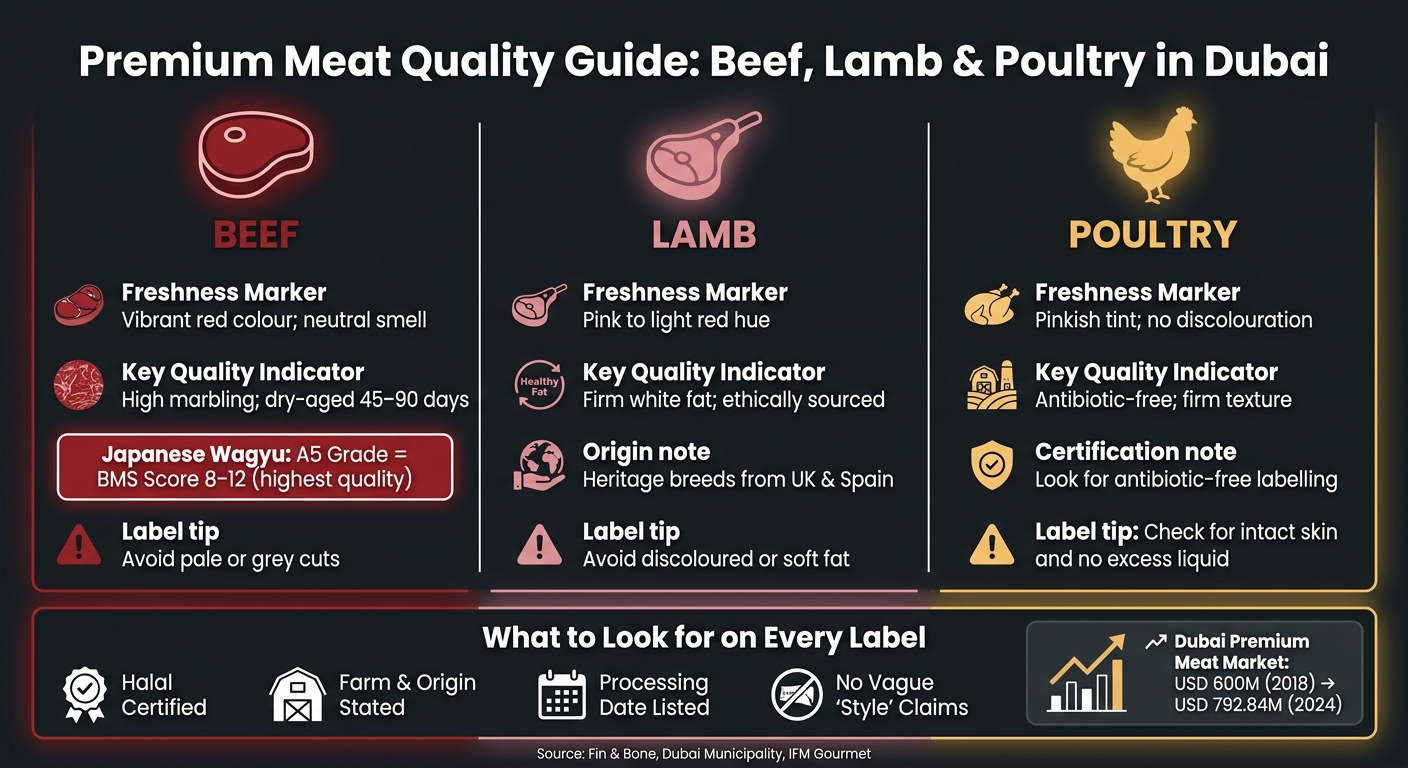
Premium Meat Quality Guide: Beef, Lamb & Poultry in Dubai
The premium meat market in Dubai has seen impressive growth, rising from USD 600 million in 2018 to an estimated USD 792.84 million by 2024. This increase reflects the growing demand for high-quality and ethically sourced meat products. With consumers becoming more selective, retailers have had to meet stricter standards, focusing heavily on Halal certification and food safety protocols to ensure excellence.
Halal Certification and Food Safety Rules
Halal certification in Dubai adheres strictly to Islamic principles. This means ensuring humane animal treatment, following prescribed slaughter methods, and keeping Halal products separate from non-Halal items. The Dubai Municipality enforces these rules alongside stringent food safety measures, including cold-chain management and professional handling practices.
"In the UAE, Halal certification is the foundation of quality. At King Meat, our Halal process is about more than just compliance; it is about respect for the animal and the consumer." - King Meat Shop
Premium meat suppliers often exceed these requirements, implementing international quality controls and maintaining traceability for imported products. Beyond certifications, visual and intrinsic markers help identify top-tier meat.
Quality Markers for Beef, Lamb, and Poultry
When selecting premium meat, certain visual and quality markers can help distinguish the best cuts:
- Beef: Look for vibrant red colour and fine marbling - those streaks of intramuscular fat that enhance flavour, tenderness, and juiciness. Avoid pale or grey cuts.
- Lamb: Fresh lamb should have a pink to light red hue with firm, white fat.
- Poultry: Opt for cuts with a pinkish tint, intact skin, and labels indicating antibiotic-free sourcing.
| Meat Type | Freshness Marker | Key Quality Indicator |
|---|---|---|
| Beef | Vibrant red colour; neutral smell | High marbling; dry-aged 45–90 days |
| Lamb | Pink to light red hue | Firm white fat; ethically sourced |
| Poultry | Pinkish tint; no discolouration | Antibiotic-free; firm texture |
Artisanal techniques, such as dry-ageing beef for 45–90 days, further enhance flavour and texture, setting premium cuts apart.
How to Read Meat Labels and Grades
Understanding meat labels is crucial for verifying quality. For example, Japanese Wagyu uses a detailed grading system. The Yield Grade (A, B, or C) reflects the usable meat quantity, while the Quality Grade (1 to 5) assesses marbling, meat colour, firmness, and fat quality. An A5 rating, the highest, signifies perfection across all four categories. Marbling is further evaluated using the Beef Marbling Standard (BMS) scale, with scores ranging from 1 to 12. A BMS score of 8–12 qualifies for the Grade 5 category.
"The final Quality Grade is only as good as its weakest link. For a steak to earn a coveted '5', it must score a perfect 5 across all four categories: marbling, meat colour, firmness, and fat quality." - IFM Gourmet
When purchasing premium Wagyu, always request the Certificate of Authenticity. This document includes a unique 10-digit tracking ID, details about the animal’s lineage, the farm and prefecture of origin, and the processing date. Be wary of vague labels like "Wagyu-style" or "Kobe-style" - authentic products will clearly state the exact grade and origin.
sbb-itb-3031837
Sustainable and Ethical Meat Sourcing
When searching for premium meat in Dubai, the principles of sustainable and ethical sourcing are key. With most meat imported from countries like Australia, New Zealand, Japan, Spain, and the UK, ensuring traceability throughout the supply chain becomes even more critical.
What Sustainable and Ethical Meat Actually Means
Sustainable and ethical meat sourcing involves farming practices that prioritise environmental care and animal welfare. This includes methods like grass feeding, minimal use of antibiotics, and raising heritage breeds in spacious environments. It also emphasises reducing food miles and ensuring humane treatment during transport. In Dubai, look for labels such as "pasture-raised," "grass-fed," "heritage breed," and "no added growth hormones" - these terms reflect specific commitments to farming practices that directly influence the taste, texture, and nutritional quality of the meat. These values are what set premium beef, lamb, and poultry apart in Dubai's market.
Traceability and Supply Chain Transparency
Traceability ensures that every step of the meat's journey - from farm to butcher - is documented. Reliable suppliers maintain detailed records, creating a transparent audit trail that not only guarantees quality but also enables quick action if issues arise.
"Transparency & Traceability for us means that our customers have the right to know exactly where the food comes from." - Fin & Bone
Fin & Bone exemplifies this commitment by working with trusted producers like Mayura Station in Australia for Wagyu and Miyazakigyu in Japan. Instead of vague regional labels, they provide specific sourcing details. Some butcheries in Dubai even allow customers to observe the preparation process, offering an added layer of transparency. When purchasing premium cuts, ask your butcher for supply chain documentation and verify that labels clearly state the farm, region, and processing date. This level of openness ensures confidence in your choices.
Halal Compliance and Welfare Standards
In Dubai, halal certification goes hand in hand with ethical sourcing. Traceable, ethically raised meat should include ESMA (Emirates Authority for Standardisation and Metrology) verification, confirming compliance with UAE quality standards. Additionally, animal welfare audits from countries like Australia and New Zealand - known for their strong welfare regulations - add another layer of trust. If documentation is incomplete or unclear, it’s best to proceed with caution.
How to Choose High-Quality Meat in Dubai
When it comes to selecting the perfect cut of meat for your next meal, paying attention to quality and sourcing is key. Here’s a guide to help you make the best choice.
How to Assess Meat Quality
Your senses are your best tools for evaluating meat. Fresh beef and lamb should have a vibrant red or pink colour. Steer clear of anything that appears pale, grey, or uneven in tone. For poultry, opt for firm, plump flesh with no signs of discolouration or translucent skin.
Marbling is another important factor, especially for premium beef cuts like Wagyu. Those fine white streaks of fat running through the meat contribute to tenderness and flavour. Even and abundant marbling is a hallmark of high-quality beef.
Pay attention to the smell as well. A clean, neutral scent is a good sign, while any off-odour could indicate spoilage. When buying packaged meat, ensure the packaging is intact with no leaks or excess liquid. Wet or slimy textures are red flags. For dry-aged beef, a darker red colour signifies proper aging.
Once you’re confident in the quality, choose a cut that matches your cooking plans.
Best Cuts for Different Cooking Methods
Different cuts shine with different cooking techniques. For grilling or high-heat searing, cuts like Ribeye, Striploin, Tomahawk, and Tenderloin are ideal because of their fat content and texture. Wagyu, whether Australian Mayura or Japanese Miyazakigyu, is perfect for simple pan-searing, allowing its natural flavours to take centre stage.
For slow cooking or braising, go for tougher cuts like Brisket, Beef Short Ribs, or mutton cuts. These cuts benefit from long cooking times, which break down connective tissues for tender, flavour-packed results. If you’re preparing Emirati dishes, Mutton Leg is great for slow-roasting or stewing, while chicken breast fillets are a versatile choice for quick and healthy meals.
| Cut | Cooking Method | Use |
|---|---|---|
| Ribeye / Striploin / Wagyu | Grilling / Pan-searing | Steaks, BBQ |
| Tomahawk | Roasting / Grilling | Showpiece meals |
| Tenderloin | Searing | Fine dining |
| Brisket / Short Ribs | Slow cooking / Braising | Weekend roasts |
| Mutton Leg / Shoulder | Roasting / Stewing | Emirati stews, Ouzi |
| Chicken Breast Fillets | Sautéing / Grilling | Healthy meals, salads |
Getting the Most from Fin & Bone's Butchers
Choosing the right cut is only part of the equation. Expert advice can elevate your experience. At Fin & Bone in Al Barari, Head Butcher Richard Douglas and his team offer guidance tailored to your needs. Whether you need help picking the best cut for a recipe, portioning meat to specific sizes, or sourcing rare international breeds, they’ve got you covered. This personalised service is especially valuable for special occasions.
"Premium meat isn't just about being expensive - it's about taste, tenderness, safety, and transparency." - Salman Tariq
Where to Buy Premium Meat in Dubai
Finding a reliable supplier is key to sourcing high-quality, ethically produced meat in Dubai.
Fin & Bone: Premium Meat in Al Barari
Situated in Seventh Heaven, Al Barari, Fin & Bone is a neighbourhood butcher offering restaurant-grade meat. The shop is open daily from 9:00 AM to 10:00 PM, making it a convenient choice for locals and visitors alike.
The store's open layout lets you see the butchering process firsthand, reflecting their commitment to transparency. As they explain:
"Transparency & Traceability for us means that our customers have the right to know exactly where the food comes from." - Fin & Bone
Fin & Bone carries an impressive selection of beef and lamb, including renowned labels like Mayura Wagyu, Miyazakigyu, W-Black, Rangers Valley, and Angus Pure. Their dry-aged cuts, aged on-site for 45 to 90 days, are carefully managed by Head Butcher Richard Douglas, whose expertise comes from working at luxury establishments such as The Lana and The Abu Dhabi Edition.
For those who prefer shopping online, Fin & Bone offers an ecommerce platform with home delivery options.
Online and In-Store Shopping at Fin & Bone
At finandbone.ae, you can browse and order from their Butcher's Counter, Fishmonger, and Pantry sections, all delivered to your doorstep. Alternatively, you can contact their team via WhatsApp at +971 4 881 0015 for assistance.
If you visit the store, the butchers can customise cuts to your preferences, guide you on marbling scores, and even source rare items through their bespoke service - perfect for special occasions or unique culinary needs.
Questions to Ask Before You Buy
To make the most of your purchase, ask the butchers the right questions. Find out where the meat was farmed, whether it has been dry-aged and for how long, and what the animal was fed - since grass-fed and grain-fed meats have distinct flavours. For Wagyu, confirm the marbling score to match your cooking style. Ensure the meat’s sourcing details, including halal certification, meet your requirements. Lastly, explore pairing options from their pantry, which features house-made butters, rubs, and pickles crafted to enhance their premium cuts.
"The core of our belief is that good food starts with good ingredients and is taken care of by people who handle them with detail and thoughtfulness." - Fin & Bone
Storing and Cooking Premium Meat at Home
Once you've purchased high-quality cuts, how you store and cook them can make or break the experience. The effort you put into proper handling pays off when it’s time to enjoy your meal.
Proper Storage in Dubai's Climate
Dubai's hot climate makes it crucial to maintain a consistent cold chain. Always transport your meat in a cooler bag and refrigerate it immediately upon reaching home.
- Keep fresh meat at below 4°C in the fridge and aim to cook it within 2–3 days.
- If you’re not cooking it soon, freeze it right away. Frozen beef stays good for up to 6 months when stored correctly.
- Leave the meat in its original vacuum-sealed packaging to avoid freezer burn and lock in its flavour.
| Storage Method | Temperature | Maximum Duration |
|---|---|---|
| Refrigerator | Below 4°C | 2–3 days |
| Freezer | Standard freezer temp | Up to 6 months |
When it’s time to cook, defrost your meat safely to maintain its quality.
Safe Defrosting and Handling
For safe defrosting, always thaw meat in the refrigerator - never on the counter. Transfer it from the freezer to the fridge 24 hours before cooking to ensure even thawing. Avoid refreezing thawed meat, as it can compromise both texture and flavour.
To prevent cross-contamination, use separate chopping boards for raw meat and other ingredients. Clean your hands and all surfaces thoroughly after handling raw meat. If you keep Halal meat at home, store it separately from non-Halal items to maintain household standards.
Once your meat is ready to cook, precise temperatures and resting times are key to achieving the best results.
Cooking Temperatures and Resting Times
The best way to ensure your meat is cooked properly is by checking its internal temperature. Here’s a quick guide:
- Beef: Cook to 55–57°C for medium-rare or 63°C for medium.
- Lamb: Aim for 63°C for a slightly pink centre or 70°C if you prefer it well done.
- Poultry: Always cook to 74°C for safety.
After cooking, let thick cuts like Tomahawk or Rib Eye rest for 5–10 minutes. This step allows the juices to redistribute, ensuring a juicy and flavourful bite. For highly marbled cuts, such as Wagyu, resting enhances the buttery texture by letting the fat settle.
Conclusion: Buying the Best Meat in Dubai
When it comes to choosing premium meat in Dubai, focus on its appearance, origin, and how it's stored and prepared. Look for vibrant colour, intricate marbling, a fresh scent, and verified Halal certification. Equally important is ensuring the meat is responsibly and transparently sourced.
The quality of meat is shaped by factors like the farm it comes from, the feeding practices, and the aging process. Traceability plays a key role. From the look and texture to knowing exactly where and how it was sourced, every detail counts when selecting the finest meat in Dubai.
At Fin & Bone, these values take centre stage, blending expert craftsmanship with traceable sourcing.
"At Fin & Bone, meat is treated as a craft, not a commodity." – Raemona
Fin & Bone, located at Seventh Heaven in Al Barari, is where expert butchery meets global quality. Under the guidance of Head Butcher Richard Douglas – renowned for his work in dry-aging and charcuterie at The Lana (Dorchester Collection) and The Abu Dhabi Edition – they offer a curated selection of premium cuts and pantry essentials, all backed by meticulous sourcing.
Open daily (9 am–10 pm), Fin & Bone also provides online ordering and delivery across Dubai. Whether you need advice on a cut, cooking tips, or sourcing details, their team is ready to assist with your questions.
FAQs
How can I verify Wagyu is authentic before I buy?
To ensure you're getting genuine Japanese Wagyu, always ask for the official Certificate of Authenticity. This certificate contains essential details like the cow's unique 10-digit ID, its lineage, and breeding history. Reputable suppliers, such as Fin & Bone, focus on transparency and will have no issue providing this documentation. Moreover, confirm the meat is Halal certified to align with UAE standards.
What dry-ageing time should I choose for my steak?
At Fin & Bone, our dry-aged steaks are aged for 45 to 90 days, striking the perfect balance between flavour and tenderness. This meticulous process allows the meat to develop a rich, complex taste while maintaining its natural appeal. Choosing any cut within this range ensures you're enjoying beef of the highest quality, designed to deliver exceptional texture and taste.
What’s the safest way to transport meat home in Dubai?
To ensure your meat stays fresh while transporting it home in Dubai, maintaining the cold chain is key. Opt for temperature-controlled packaging, and if you're purchasing in person, ask for vacuum-packing. This method shields the meat from the region's heat, keeping it fresh, hygienic, and flavourful until it reaches your kitchen.


