

If I’m buying seafood in Dubai, I need 3 things right away: clear origin, cold storage from source to door, and steady quality week after week. That is the whole point here.
In simple terms, this article explains:
- Why seafood can be hard to judge when labels and handling records are missing
- How Fin & Bone sources stock from Japan on Tuesdays and the UK/Scotland on Thursdays
- What traceability includes, such as species, origin, and catch method
- How delivery is handled through cold storage and refrigerated transport in Dubai
- What you can order, including salmon, tuna, seabass, oysters, Dover sole, hake, lobster, and prawns
- Why this matters in the kitchen, from raw dishes to grilling, roasting, and pan-searing
A simple fact: seafood quality can drop fast when temperature control slips, even for a short time. So if I can’t check where the fish came from or how it was moved, I’m left guessing on taste, texture, and safety.
Here’s the short version:
| What matters | What I should look for |
|---|---|
| Origin | Species name, source country, catch area |
| Handling | Clear prep, clean filleting, low processing |
| Cold chain | Chilled storage, refrigerated delivery, short transit |
| Supply timing | Japan imports on Tuesday, UK/Scotland on Thursday |
| Best uses | Raw service, grilling, roasting, pan-searing |
The main takeaway: if I want seafood that performs well at home, I should buy from a fishmonger that shows where it came from, keeps it cold all the way, and prepares it properly before delivery.
The Problem: Buying Seafood in Dubai Raises Questions About Freshness and Trust
Dubai depends a lot on imported seafood. That makes provenance and handling tougher to check. By the time seafood reaches the counter, it has often passed through several hands. So the product on display may say very little about how it was caught, stored, or moved. And that’s where the doubt begins: buyers can only judge what they can verify.
Freshness Is Hard to Judge Without Clear Provenance
If there’s no catch date or temperature record, buyers can’t tell how fresh the seafood is. If species, origin, and harvest method are missing, customers can’t confirm quality, sustainability, or handling either. Put together, hidden origin and missing handling data create one clear problem: low confidence in what’s being sold.
For premium seafood, a dependable supply chain isn’t a nice extra. It’s the baseline.
Mislabelling and Unclear Sourcing Reduce Buyer Confidence
When labels leave out species names, harvest regions, and production methods, buyers have no way to check whether the seafood was sustainably caught, minimally processed, and free from unnecessary additives. That information gap weakens trust fast - and for good reason.
Premium Shoppers Need Consistency, Not Guesswork
Premium buyers want the same standard every time, not the odd good batch. When sourcing varies, it shows up straight away in the kitchen. Even skilled cooks can end up with uneven results when the stock itself is inconsistent.
That’s why traceable sourcing and controlled delivery matter.
sbb-itb-3031837
The Solution: How Fin & Bone Sources Seafood from Trusted Global Suppliers
Fin & Bone closes the freshness and trust gap by sourcing seafood directly from suppliers with clear, documented provenance. That direct approach cuts out the guesswork. Based in Dubai, Fin & Bone works with trusted suppliers picked for their focus on quality and traceability.
A Curated Mix of Global and Regional Sourcing Origins
Fin & Bone imports seafood from Japan every Tuesday and the UK every Thursday.
| Sourcing Region | Delivery Day | Key Seafood Products | Sourcing Method |
|---|---|---|---|
| Japan | Tuesday | Premium tuna, oysters, seasonal specialities | Seasonal selection |
| United Kingdom / Scotland | Thursday | Scottish salmon, Dover sole, cod, plaice, hake | Wild-caught, line-caught |
Scottish seafood comes direct from Scottish fishermen. Japanese products come from trusted suppliers chosen for quality and what’s in season. If an item isn’t currently in stock, Fin & Bone also offers a bespoke sourcing service, so the team can procure specific products on request.
That sourcing model is backed by item-level traceability.
What Traceability Looks Like in Practice
Every product includes the species, origin, and catch method. So customers can see a clear record of how it made its way to Dubai.
Why Skilled Preparation Matters After Sourcing
Getting great seafood in is only part of the job. After it reaches Dubai, careful preparation helps protect that quality. Fin & Bone’s trained fishmongers handle precision filleting, custom cuts, and expert cleaning to preserve flavour and texture, so the seafood arrives at your kitchen in top condition.
How Freshness, Safety, and Delivery Are Protected from Source to Dubai
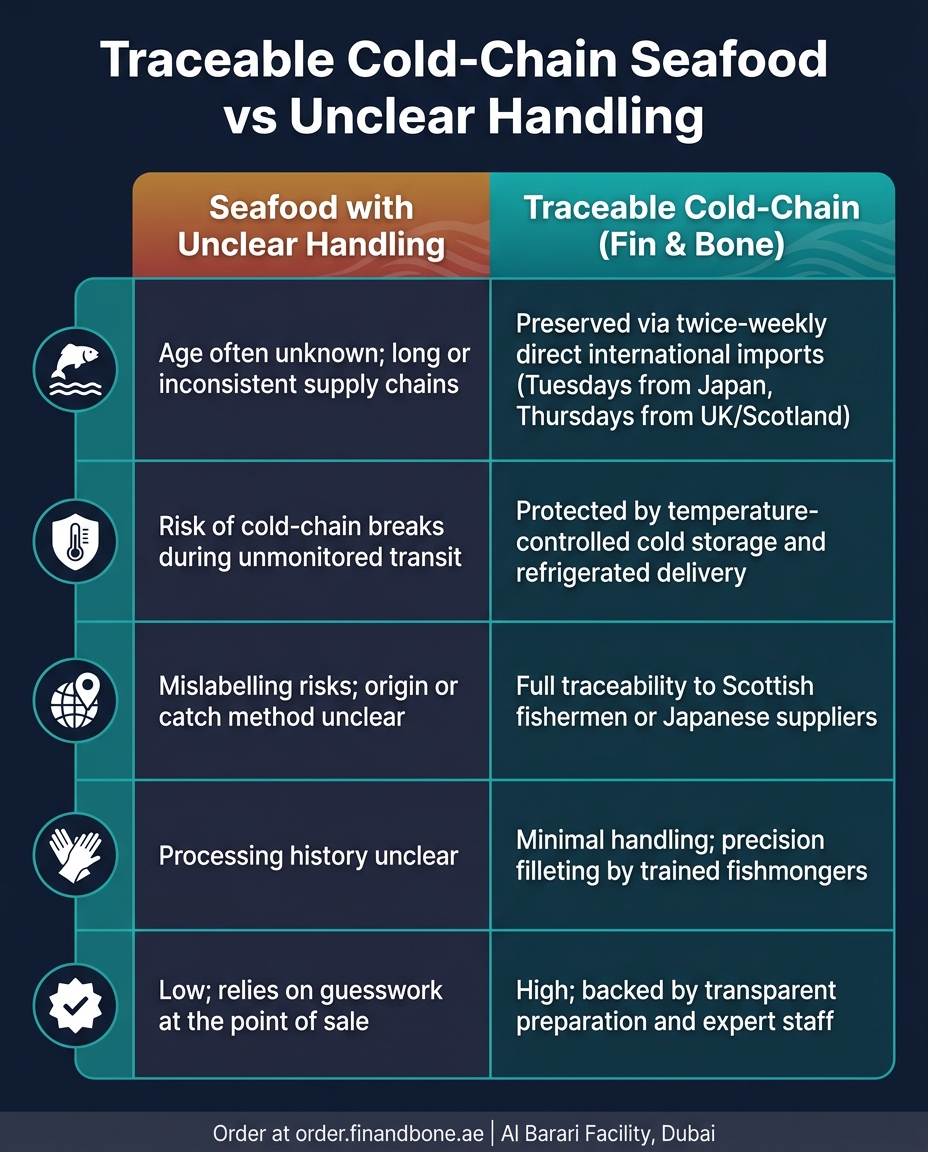
Traceable Cold-Chain Seafood vs Unclear Handling: What's the Difference?
Good sourcing means little if the cold chain falls apart. And traceability only counts when handling stays controlled all the way to your door. From the moment seafood is landed or harvested, temperature control decides whether that quality makes it to your kitchen.
Cold-Chain Control and Temperature Handling in °C
The twice-weekly air import schedule helps keep transit times short. Once stock arrives, it moves into temperature-controlled cold storage at Fin & Bone's Al Barari facility, where fresh products are kept under controlled conditions.
Getting the chilled temperature right at every stage matters. Even short temperature swings can affect safety and texture. That’s why handling is kept to a minimum throughout the process, helping preserve the natural flavour, texture, and nutritional quality of each product.
Put simply: cold-chain control is the last step that connects trusted sourcing with seafood that arrives in top condition.
Reliable Delivery for Customers Across Dubai
Once your order is packed, it leaves the Al Barari facility in a refrigerated vehicle. Delivery is timed to protect the cold chain, so the same controlled conditions used from the start stay in place right up to your door.
If you want the freshest pick, it makes sense to order around the import windows.
Comparison Table: Seafood with Unclear Handling vs Seafood with Traceable Cold-Chain Assurance
| Feature | Seafood with Unclear Handling | Traceable Cold-Chain (Fin & Bone) |
|---|---|---|
| Freshness | Age often unknown; long or inconsistent supply chains | Preserved via twice-weekly direct international imports |
| Safety | Risk of cold-chain breaks during unmonitored transit | Protected by temperature-controlled cold storage and refrigerated delivery |
| Provenance | Mislabelling risks; origin or catch method unclear | Full traceability to Scottish fishermen or Japanese suppliers |
| Handling | Processing history unclear | Minimal handling |
| Buyer confidence | Low; relies on guesswork at the point of sale | High; backed by transparent preparation areas and expert staff |
That level of control makes the next step much simpler: knowing what to order.
With freshness protected, the focus shifts to the range available and how each product works in the kitchen.
What You Can Order and How It Improves Home Cooking and Premium Dining
Salmon, Seabass, Oysters, Lobster, and Prawns
Once freshness is taken care of, the next step is simple: what should you order, and what does each option do well in the kitchen? The range is picked with cooking in mind, from raw dishes to grilling, roasting, and pan-searing.
Scottish salmon arrives on Thursdays as part of the UK/Scottish import day. You can order it as a whole fish, fillets, or portions, which makes it a good fit for grilling, pan-searing, or roasting. Japanese salmon arrives on Tuesdays and is better suited to raw dishes when you want a lighter, cleaner presentation.
Seabass, sourced from trusted suppliers, works well roasted whole or pan-seared as fillets. It keeps its texture neatly under heat, which makes a big difference on the plate. Japanese oysters arrive shell-on and are best served raw on ice, whether you're building a premium starter or putting out a seafood platter.
Lobster and prawns are a strong choice for the grill or for seafood platters. Dover sole from Scotland is available whole or filleted and suits elegant pan-seared dishes for dinner parties. That traceability comes through in the texture, flavour, and consistency you get when serving.
How Better Sourcing Improves Taste and Cooking Results
Fresh, well-handled fish behaves differently once it hits the pan. It holds its texture under heat, doesn’t release too much water when seared, and keeps its natural flavour without needing heavy seasoning. For many home cooks, that changes everything.
The ingredient does most of the heavy lifting. Scottish white fish like hake cooks fast with simple seasoning and is a dependable pick for weeknight meals. Japanese tuna, available as loin or saku blocks, is suited to raw service, especially on Tuesdays or Wednesdays when the Japanese import is at its freshest. Professional cleaning, filleting, and portioning also help. You get even cuts, less prep, and a cleaner look when it’s time to serve.
Product Table: Origin, Form, and Best Use
The easiest way to choose is by how you plan to use it: raw service, quick weeknight cooking, or premium entertaining.
| Seafood | Origin | Available Form | Best Use |
|---|---|---|---|
| Salmon | Scotland / Japan | Whole, Fillets, Portions | Grilling, roasting (Scottish); sushi, sashimi (Japanese) |
| Tuna | Japan | Loin, Saku blocks | Raw service, sushi, sashimi |
| Seabass | Global / Regional | Whole, Fillets | Roasting whole, pan-searing |
| Oysters | Japan | Shell-on | Raw on ice, premium starters |
| Dover Sole | Scotland (UK) | Whole, Fillets | Pan-searing, dinner parties |
| Hake | Scotland (UK) | Fillets | Quick weeknight cooking |
| Lobster / Prawns | Global / Regional | Whole, Shell-on | Grilling, seafood platters |
Conclusion: Why a Trusted Dubai Fishmonger Delivers on Quality, Safety, and Convenience
When seafood is traceable, kept under cold-chain control, and delivered on time, the whole buying process gets a lot easier. Fresh seafood in Dubai comes down to three things: clear provenance, proper temperature control, and delivery you can count on.
That level of care starts with traceable sourcing, continues through careful handling, and shows up in dependable delivery across Dubai. Put simply, that’s what turns buying seafood from a guess into peace of mind.
For home cooks and hosts, the upside is clear: better flavour, firmer texture, and less prep.
Order online at order.finandbone.ae or contact the team for special sourcing requests.
FAQs
How do I verify seafood traceability?
You can check seafood traceability through Fin & Bone’s clear approach to sourcing and transparency. Our fishmongers follow strict standards for handling, packaging, and delivery, with firm food safety protocols at every step.
We receive direct imports twice a week from trusted partners in the United Kingdom and Japan. That means we can confirm where your seafood comes from, from hook to table. If you’d like more detail, our team can guide you through the origin and handling of your selection.
When should I order for the freshest imports?
For the freshest imports, place your order earlier in the day. Fin & Bone offers same-day delivery when you order before the daily cut-off time listed on the site.
If you want the freshest Catch of the Day seafood, time your order around the twice-weekly import schedule: Tuesdays for direct imports from Japan and Thursdays for fresh arrivals from the UK.
Which seafood is best for raw dishes?
For raw dishes such as sushi, the best picks from our range are premium tuna, salmon, and oysters imported directly from Japan. These come in with our regular Tuesday arrivals, which helps keep the freshness and quality needed for raw serving.
Our expert fishmongers can also help with filleting and portioning, so your seafood is prepped neatly and ready for the table.


