

If I want premium meat near Al Barari, the short answer is Fin & Bone in Seventh Heaven. It offers dry-aged beef aged 45 to 90+ days, halal clarity, named sourcing, and seafood deliveries twice a week. That matters because many regular counters can sell meat without clear ageing details, farm names, or cooking guidance.
Before I buy, I’d check four things:
- Source: farm, station, fishery, and country
- Ageing: especially for beef, with clear day counts
- Handling: clean prep, proper trim, chilled storage
- Fit for purpose: the right cut for grilling, roasting, or weeknight meals
If a butcher cannot explain the cut, origin, ageing, and how to cook it, I’d move on. In Al Barari, that level of detail is often what separates a standard meat counter from a premium one.
Quick snapshot:
| What I’d check | What matters |
|---|---|
| Beef | Deep red to dark burgundy colour, even marbling, ageing details |
| Lamb | Bright meat, clean fat cover, clear feeding method |
| Poultry | Clean skin, not watery, named breed or farm |
| Seafood | Firm flesh, clear eyes, clean sea smell, timed around delivery days |
| Shop standards | Halal clarity, visible handling, staff who can answer direct questions |
Fin & Bone is listed at Seventh Heaven, Wadi Al Safa 3, Al Barari, Dubai, and is open Tuesday to Sunday, 9:00 am to 8:00 pm. It also delivers across Dubai in temperature-controlled conditions. For shoppers who want better meat, not just the nearest store, that is the main takeaway from this guide.
The Problem: Why Finding Truly Premium Meat Nearby Is Harder Than It Looks
Buying premium meat sounds simple. But once you're standing at a retail counter, the line between an ordinary cut and properly handled, well-sourced meat can get blurry fast.
The issue shows up the moment you look past the display case. Many retail counters sell cuts that are wet-aged, or not aged the right way at all. Sourcing details can be vague. And the person behind the counter is often there to pack and weigh the meat, not guide you through what you're buying. For home cooks, that gap matters. It affects flavour, tenderness, and even how long the meat needs to cook.
Common Signs a Butcher Does Not Meet Premium Standards
The clearest warning signs are usually right in front of you, even before you ask anything. Inconsistent marbling, poor trimming, and no clear information about ageing are all red flags.
Premium dry-aged beef needs controlled ageing. Most retail counters skip that step. If a butcher can't tell you the ageing process and the origin of the cut, it isn't premium. It's that simple.
A proper premium butcher should be able to explain the ageing, the trim, and the best cooking method in plain language. Not in jargon. Not with vague sales talk. If the staff can't answer those basic questions, you're dealing with a standard retail counter, not a craft butcher.
Why Provenance, Halal Clarity, and Handling Standards Matter in the UAE
In the UAE, provenance and halal clarity matter a great deal. But not every counter makes that easy to check.
Country-of-origin labels often don't go far enough. They may tell you the country, but stop short of farm, breed, and welfare details. For shoppers in Al Barari, that missing information matters. Premium labels alone don't mean much without proof of freshness, traceability, and handling.
That proof should be clear and specific, such as:
- Named farms
- Breed details
- Welfare standards
- Clear delivery days
The same applies to seafood. Origin and delivery timing should be clearly stated, not left open to guesswork. That's the difference between a premium butcher and a counter that leaves shoppers filling in the blanks.
The next step is finding a shop that can prove those standards every day.
sbb-itb-3031837
The Solution: Fin & Bone in Al Barari for Premium Meat and Seafood
For shoppers in Al Barari who want premium cuts, clear sourcing, and careful handling in one place, Fin & Bone is a solid local pick. You’ll find it in Seventh Heaven, Wadi Al Safa 3, Al Barari, Dubai, with temperature-controlled delivery across Dubai through order.finandbone.ae.
The shop is open Tuesday to Sunday, 9:00 AM to 8:00 PM.
What You Can Buy at Fin & Bone
Fin & Bone’s beef is dry-aged in-house for 45 to 90+ days. The range includes Miyazakigyu from Japan, Mayura Station and W-Black from Australia, along with Rangers Valley and Angus Pure grass-fed options. Available cuts include:
- rib eye
- tomahawk
- striploin
- tenderloin
- fillet
- rump cap
There’s more than beef on the counter. You can also buy milk-fed Spanish lamb, grass-fed UK heritage lamb, heritage breed free-range chicken, and duck.
Seafood lands twice a week. Tuna and oysters arrive on Tuesdays, while Scottish salmon, Dover sole, cod, hake, and plaice arrive on Thursdays.
The shop also offers house-made items such as sausages, gourmet burgers, marinated meats, rubs, compound butters, pickles, and mayonnaise. In the pantry, you’ll find aged Modena balsamic, Guernsey A2 milk, cave-aged cheeses, sourdough, black sesame buns, artisanal pasta, and Japanese Ubame oak charcoal.
What Makes Fin & Bone Worth Choosing
Fin & Bone is led by Culinary Director Craig Small and Head Butcher Richard Douglas, who bring experience from The Lana and The Abu Dhabi Edition. That background counts, but what stands out in-store is the visible prep area. You can watch the butchers work, check how products are handled, and make your own call on freshness and care.
That kind of openness matters. When you’re buying meat or seafood at this level, handling isn’t a small detail - it’s part of the whole point.
The range also includes line-caught fish from Scottish fishermen and pasture-raised heritage meats that are minimally processed and free from unnecessary additives. And if you don’t see the cut or product you want on the shelf, the team can source it on request.
How to Judge Meat Quality Before You Buy
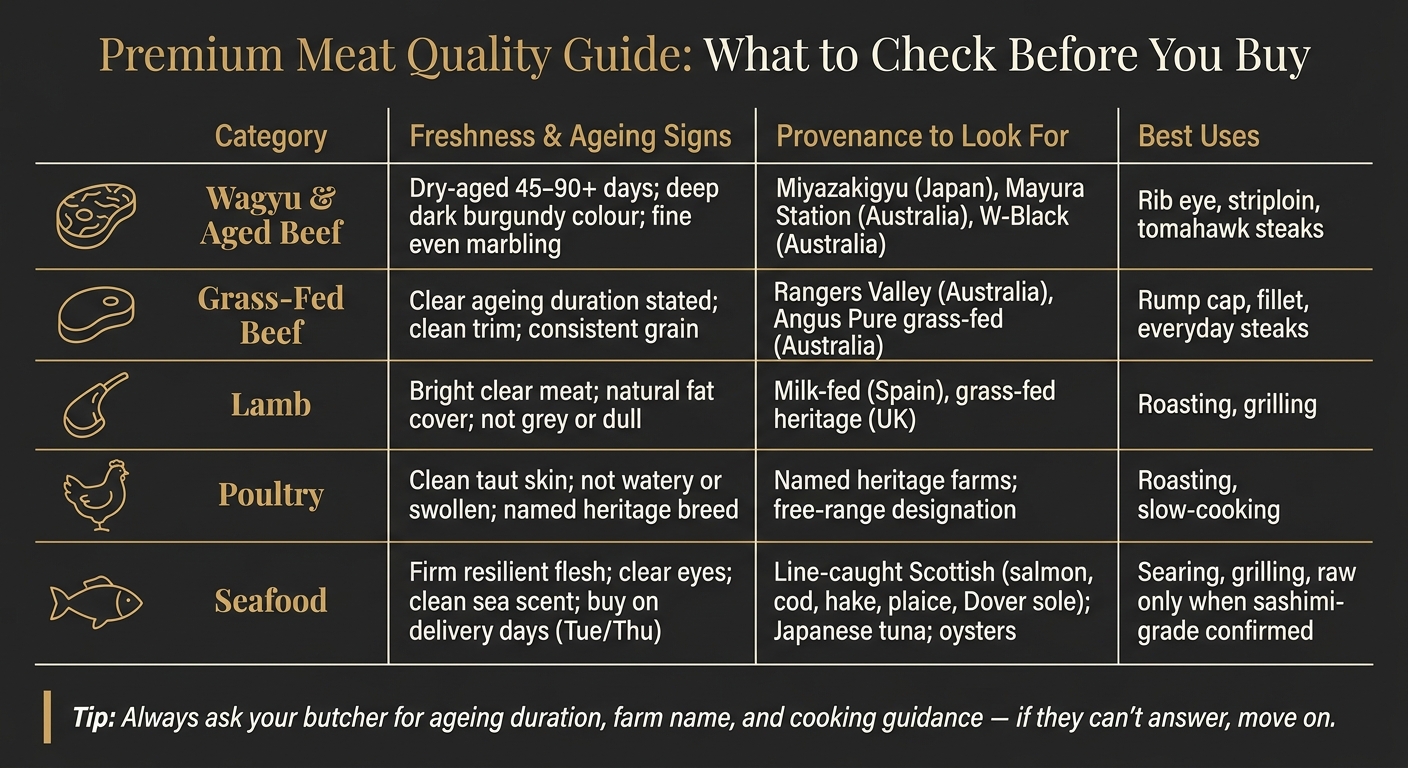
Premium Meat Quality Guide: What to Check Before You Buy
Now that you know what Fin & Bone stocks, the next step is knowing how to judge each cut before you buy it.
This matters more than most people think. If you know what to check, you're far less likely to pay premium prices for meat that's just average. A few simple checks before you order online or head in-store can make a big difference.
Freshness, Cut Quality, and Ageing Details to Check
Start with appearance.
Beef should look deep red. If it's dry-aged, it may look darker, almost burgundy, and that's normal. Lamb should look bright and clear, not grey or dull. Poultry skin should look clean and taut, not watery or swollen.
With beef, it's worth asking how long it was aged and how it was handled. That one detail tells you a lot. If you're buying Wagyu, check the marbling closely. You want fine, even marbling running through the muscle, not fat sitting in thick patches around the edges.
Seafood is a different game, but the signs are still easy to spot. Look for:
- Firm, resilient flesh
- Clear eyes on whole fish
- A clean sea scent
It also helps to match your seafood purchase to the shop's delivery days. Timing can tell you just as much as appearance.
Sourcing, Traceability, and Ethical Standards
A premium retailer should be able to tell you exactly where a product came from. Not just the country, but the farm, station, or fishery.
That's a big distinction. "Imported from Australia" is vague. A named farm or station gives you something far more useful. The same goes for seafood. Look for named fisheries instead of generic origin claims.
For lamb, ask whether it's milk-fed or grass-fed heritage. For poultry, look for heritage breed and free-range designations. If you're checking standards, the labels that usually matter most are pasture-raised, line-caught, and minimally processed.
In the UAE, halal clarity is non-negotiable. You should be able to see clear prep standards, and staff should be able to explain the cut, the fat content, and the best cooking method without dancing around the question.
Premium Meat Quality Checks by Category: A Comparison Table
Use the quick guide below for a side-by-side look.
| Category | Freshness Signs | Key Texture Cues | Provenance to Look For | Recommended Uses |
|---|---|---|---|---|
| Wagyu & Aged Beef | Dry-aged 45–90+ days; deep, dark colour | High marbling; firm but tender | Miyazakigyu (Japan), Mayura Station (Australia), W-Black (Australia) | Rib eye, striploin, tomahawk steaks |
| Grass-fed Beef | Ageing duration; clean trim | Leaner; consistent grain | Rangers Valley, Angus Pure (Australia) | Rump cap, fillet, everyday steaks |
| Lamb | Natural fat cover; clear, bright meat | Succulent; fine-grained | Milk-fed (Spain); grass-fed heritage (UK) | Roasting, grilling |
| Poultry | Heritage breeds; clear skin | Plump; not watery or swollen | Named heritage farms | Roasting, slow-cooking |
| Seafood | Moist, glossy flesh; clear eyes; clean sea scent | Firm, resilient flesh | Line-caught; Scottish (salmon, cod, hake); Japanese (tuna) | Searing, grilling, raw only when sashimi-grade is confirmed |
What to Order and How to Use It at Home
Best Cuts and Products for Everyday Meals and Special Dinners
Once you know what good quality looks like, the next step is simple: pick the right cut for the meal.
For everyday cooking, grass-fed Rangers Valley or Angus Pure beef is a smart place to start. Rump cap and tenderloin work well for quick weeknight dinners because they cook fast and don't need much fuss. If you want even less prep, go for house-made sausages, gourmet burgers, or pre-marinated kebabs. They’re ready to cook and make busy evenings a lot easier.
For special dinners, bigger cuts usually make more of a statement. A dry-aged tomahawk or Miyazakigyu Wagyu rib eye brings serious table appeal and deep flavour. With seafood, timing matters. Order around fresh arrival days if you want it at its best.
Lamb sits nicely in both camps. Grass-fed UK heritage lamb chops suit weeknight cooking, while milk-fed Spanish lamb shoulder is better for a slower roast when you’ve got more time.
Portions, Storage, and Cooking Guidance from a Skilled Butcher
One of the handiest parts of buying from a skilled butcher is getting portions cut to match your recipe. At Fin & Bone, the counter team can portion and fillet based on what you need, whether that’s exact gram weights for steaks or seafood portions for a dinner party. That saves time in the kitchen and helps cut down waste at home.
Dry-aged cuts tend to have deeper flavour and more tenderness. For thick steaks, let them rest for 5 to 10 minutes before slicing. It’s a small step, but it makes a difference. If you’re unsure about cooking times, ask the butchers for target temperatures and resting guidance before you leave the shop.
Conclusion: Where to Buy Premium Meat Near Al Barari and What to Look For
Good meat matters even more when the shop helps you cook it properly.
The gap between a good meal and a great one often starts with the quality of the meat or seafood you bring home. For Al Barari residents, that means choosing a butcher that can answer direct questions about provenance, ageing, and handling standards instead of just handing over a standard pack. Fin & Bone at Seventh Heaven brings together premium sourcing, expert counter guidance, and temperature-controlled delivery across Dubai.
FAQs
How do I choose the right cut for my meal?
Choose your cut based on how you plan to cook it, what kind of flavour you like, and the meal you’re putting together. A skilled butcher can point you to the best option for grilling, roasting, or a fast weeknight dinner.
It also helps to think about the style of beef you enjoy. Grass-fed beef tends to be leaner, while grain-fed and Wagyu cuts are known for richer marbling and a more tender bite. If you already have a recipe in mind, share it with the staff. They can guide you on the cut, seasoning, cooking time, and how long to let the meat rest before serving.
Can the butcher portion meat to my recipe?
Yes. The experienced butchers at Fin & Bone can help you work out portion sizes and suggest the right cuts and prep methods for your recipe.
You can also speak with them directly about what you need. If something isn’t in store at the moment, the team offers a bespoke sourcing service and will do their best to source it for you.
What should I ask before buying premium meat?
Ask where the meat comes from, where it was raised, and which farms the butcher works with. That gives you a clearer picture of transparency, animal care, and how the meat was handled from farm to shop. If it fits the cut you’re buying, ask if it’s been dry-aged too. That can make a big difference to flavour and tenderness.
It also helps to ask which cuts work best for your cooking method. A good butcher can steer you toward the right option, whether you’re grilling, roasting, or slow-cooking. While you’re at it, ask about portion sizes and what to serve with it, so you get the best result at home.


