

Want the best meat in Dubai? Here’s what you need to know:
Premium butchers focus on quality, hygiene, and expertise. Key factors include sourcing transparency, proper handling, and skilled cutting. Look for Halal certification, clear sourcing details, and proper storage practices like dry-ageing or vacuum-sealing. A good butcher will also offer custom cuts and reliable temperature-controlled delivery.
Quick Tips:
- Check the origin of the meat (e.g., Australian Wagyu or New Zealand lamb).
- Ensure Halal certification and proper cold-chain management.
- Look for vibrant colour, neutral smell, and visible marbling.
- Ask for custom cuts or specific thicknesses to test their expertise.
- Choose butchers offering clear sourcing and flexible delivery options.
In Dubai’s heat, even small lapses in handling can affect quality. A premium butcher ensures every cut meets high standards for taste and safety.
How Your Butcher Choice Affects Meat Quality
The butcher you choose plays a big role in determining the quality of meat that ends up on your plate. Every step they take - from selecting farms to storing and cutting the meat - impacts its flavour, texture, and safety.
How Sourcing and Handling Affect Taste and Quality
In Dubai's premium market, the origin of the meat and the animal's diet make a noticeable difference. For instance, grain-fed beef offers a buttery flavour and rich marbling, while grass-fed beef is leaner with a bold, earthy taste. A butcher who understands these distinctions and sources meat accordingly can elevate your cooking experience.
Handling is just as crucial. Skilled butchers often use techniques like dry-ageing, where meat is rested under controlled conditions for 45–90 days. This process enhances both tenderness and flavour, something you won't typically find in standard retail. Additionally, cold-chain management is vital in Dubai’s warm climate. Any lapse in the temperature-controlled journey from the farm to the butcher's counter can compromise the meat’s safety and texture.
"Knowing exactly where your meat and seafood come from... [and] proper aging significantly enhances flavor and tenderness." - Sites Tash
Precision cutting is another factor that can’t be overlooked. Poor cutting techniques can damage muscle fibres and ruin the marbling that gives meat its flavour and texture. Butchers who cut meat to order ensure it retains its natural quality.
These practices are essential for meeting the high expectations of Dubai consumers.
What Dubai Consumers Expect from a Premium Butcher
In addition to refined sourcing and handling, shoppers in Dubai look for more than just fresh meat.
"Dubai is known for its high standards in food quality, hygiene, and customer service - and this is especially true when it comes to buying meat." - Salman Tariq, MLS UAE
Consumers here prioritise Halal certification, detailed sourcing information, and hygiene standards that go beyond the basic requirements set by Dubai Municipality. There’s also a strong demand for internationally recognised grades like Australian Wagyu, USDA Prime, and New Zealand lamb. In fact, over 50% of home cooks believe that the quality of raw ingredients is the biggest factor in a meal’s success, and Dubai residents are no exception to this mindset.
sbb-itb-3031837
How to Check a Butcher's Sourcing Transparency
In Dubai's high-end market, understanding where your meat comes from is key to both quality and trust. If a butcher can't clearly explain the origin of their products or gives vague answers like "imported beef", it’s a red flag. True transparency means you should be able to trace each cut back to a specific farm, breed, and country. Asking the right questions can help you gauge how committed a butcher is to sourcing transparency.
Questions to Ask About Where the Meat Comes From
Asking direct questions can reveal a lot about a butcher's practices. For instance, inquire about the farm name, the animal's diet (grass-fed or grain-fed), and specifics about dry-ageing and storage. These details reflect a focus on quality. A premium butcher, for example, shouldn’t just label something as "Australian Wagyu." They should be able to specify a source like Mayura Station or Rangers Valley in Australia. If they hesitate or avoid details, consider it a warning sign.
Also, ask about the ageing process - whether the meat is dry-aged and for how long. Learn about how the meat is stored, transported, and kept at the right temperature. In Dubai’s hot climate, even a small lapse in cold chain management can affect quality.
"Transparency & Traceability for us means that our customers have the right to know exactly where the food comes from." - Fin & Bone
Another good indicator is whether the butcher has an open workspace. If you can watch the meat being prepared in front of you, it shows confidence in their sourcing and handling practices.
Beyond these practical checks, ethical sourcing plays a major role in ensuring high standards.
Why Traceability and Ethical Sourcing Matter
Traceability is about more than just knowing where your meat comes from - it’s a vital part of quality control. A butcher who can track every step from the farm to the counter ensures that the product has been handled correctly at every stage. This is particularly important for Halal certification in Dubai, which guarantees not only religious compliance but also humane treatment, proper slaughter methods, and hygienic processing.
"Premium meat starts at the farm. The breed of the animal, its diet, and how it's raised all influence flavor and texture." - MLS UAE
Ethical sourcing also ensures consistency. Butchers who work with trusted farms - like those offering grass-fed lamb from New Zealand, heritage beef from Scotland, or Wagyu from well-known Australian producers - are more likely to provide high-quality, reliable products week after week. Look for clear labels on every cut, detailing its source and grade. This should be the standard for any premium butcher in Dubai.
How to Assess Freshness and Storage Standards
Once you're confident about sourcing transparency, the next step is to evaluate how the meat is handled. Even the finest Wagyu can lose its appeal if not managed properly - especially in Dubai's intense heat. Start by checking the physical signs of freshness, then dive into the storage methods.
Signs of Freshness by Meat Type
Freshness can be gauged through both appearance and smell. High-quality meat should have a clean, neutral scent - any sour, pungent, or "off" odour is a warning sign. As MeatOne puts it:
"Fresh meat should have a clean, neutral smell." - MeatOne
The colour of the meat is another critical indicator. Each type of meat has its own colour benchmarks, and anything outside these norms should raise concerns:
| Meat Type | Fresh Colour | Red Flag |
|---|---|---|
| Beef | Red | Pale, grey, or brown patches |
| Lamb | Pink to light red | Dull or darkening appearance |
| Veal | Pale pink | Wet or slimy surface |
| Poultry | Pinkish-white | Greyish tint or sticky skin |
For beef lovers, marbling - the fine white streaks of fat within the muscle - is another sign of quality. Good marbling promises tenderness and rich flavour. A knowledgeable butcher can explain how marbling grades influence the meat’s quality, ensuring you get the best cuts for your table.
What to Look for in Storage and Delivery Practices
Freshness isn’t just about what you see and smell - it’s also about how the meat is stored and delivered. A butcher's storage system can tell you a lot about their commitment to quality. For instance, specialised dry-ageing facilities are a hallmark of premium operations. At Fin & Bone in Al Barari, Dubai, Wagyu and Angus cuts are dry-aged for 45 to 90 days under precise temperature and humidity controls, intensifying their flavour and tenderness.
"Dry aging involves storing various meats under very specific temperature and storage conditions to result in A-grade meat, with the meat being stored for weeks or even months at a time." - Prime Gourmet
For non–dry-aged cuts, vacuum-sealing is a good sign of quality. This method locks in freshness during transit. In Dubai’s climate, temperature-controlled packaging and same-day delivery are non-negotiable to maintain the meat’s integrity. Strict storage protocols, such as daily stock rotation, are essential to ensure every cut is as fresh as possible.
How to Judge a Butcher's Skill and Cut Quality
Beyond sourcing and storage, precise butchery is key to bringing out the best in meat's flavour and texture.
What Good Butchery Technique Looks Like
A skilled butcher does more than just divide meat into portions. They carefully remove gristle and silver skin, maintain the right balance of fat for flavour, and ensure each cut is consistent in thickness for even cooking. Techniques like scoring allow marinades to penetrate deeper, while trussing a roast ensures uniform cooking. Be cautious of shops that only sell pre-packaged cuts - a butcher who works with whole primal cuts and prepares meat in front of you demonstrates a higher level of craftsmanship.
Why Custom Cuts Signal a Premium Service
Exceptional butchery builds upon quality sourcing and proper storage to ensure the meat’s full potential is realised. The ability to meet specific requests - whether it’s a precise thickness, a deboned cut, or a French-trimmed rack - sets an expert butcher apart from a standard meat counter. As Raemona highlighted about Fin & Bone:
"At Fin & Bone, meat is treated as a craft, not a commodity." - Raemona
At Fin & Bone in Al Barari, Dubai, Head Butcher Richard Douglas brings expertise honed in luxury hospitality, including The Lana (Dorchester Collection). Beyond offering tailored cuts, the team actively sources rare products and even hosts hands-on masterclasses, giving home cooks a behind-the-scenes look at professional techniques. Don’t hesitate to ask: Can you cut this to my exact specification? A confident and precise response is a solid sign of expertise behind the counter.
Matching a Butcher's Offering to Dubai Buying Habits
Dubai shoppers value efficiency and high-quality products. For a premium butcher, it’s not just about offering great meat - it’s about making the entire process of ordering, receiving, and trusting the product as smooth as possible.
Ordering Flexibility and Personalised Service
Premium butchers in Dubai know the importance of convenience. They typically offer extended in-store hours (9 AM–10 PM), online shopping options, and even WhatsApp ordering. Some go a step further by providing temperature-controlled delivery within two hours across the city - a crucial feature in Dubai’s climate. But what sets a butcher apart is how they handle unique requests. At Fin & Bone, for example:
"If you need something special, the team will hunt it down for you." - Fin & Bone
This level of responsiveness, where a team quickly sources specific cuts, is a hallmark of a business that goes beyond the basics. These flexible ordering options align perfectly with Dubai’s demand for high standards, making them a natural fit alongside strict Halal and quality practices.
Halal Compliance and Local Preferences
Convenience alone isn’t enough - premium butchers in Dubai must also meet local religious and quality expectations. By law, all meat sold in Dubai must be Halal, but the degree of compliance varies widely. The best shops don’t just meet the minimum requirements; they provide full documentation and transparency about their processes. This includes humane animal treatment, proper slaughter techniques, and rigorous prevention of cross-contamination from sourcing to packaging.
"A premium Halal meat shop in Dubai ensures that every step - from sourcing to packaging - meets both religious and health standards, building trust with customers." - MLS UAE
Freshness is another top priority for local buyers. A well-maintained cold chain is essential to reassure customers that the meat is fresh and recently processed. When visiting a butcher, ask to see their Halal certification and inquire about their daily intake and storage practices. A detailed, confident response is a clear indication that they take compliance seriously - not just as a legal box to tick, but as a fundamental part of their service.
A Simple Checklist for Choosing a Premium Butcher
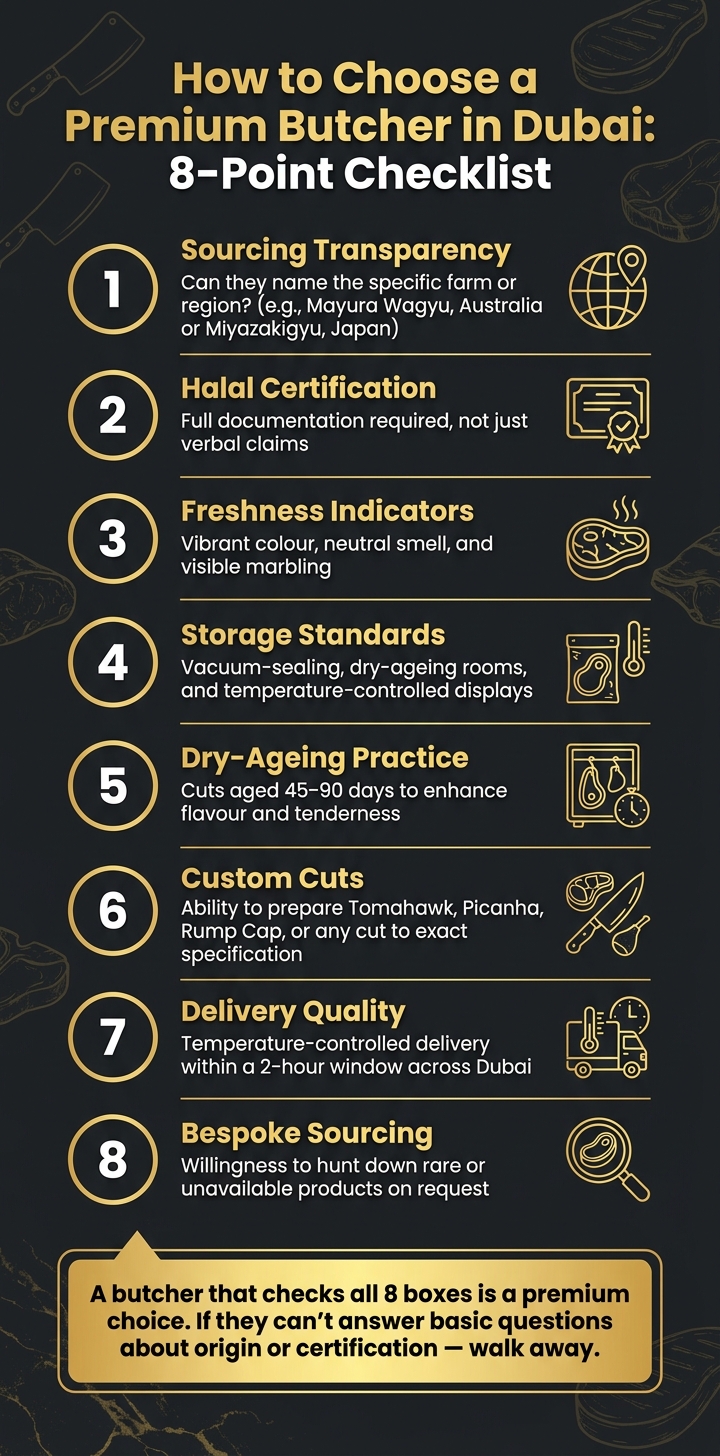
Premium Butcher Checklist: 8 Things to Look for in Dubai
Putting It All Together: Sourcing, Freshness, Skill, and Service
Here’s a quick checklist to help you evaluate a premium butcher’s sourcing, freshness, skill, and service. Whether you’re visiting in person or ordering online, the table below provides a handy reference for what to look for.
| What to Check | What to Look For |
|---|---|
| Sourcing transparency | Can they identify the specific farm or region, like Mayura Wagyu from Australia or Miyazakigyu from Japan? |
| Halal certification | Complete documentation, not just verbal claims. |
| Freshness indicators | Look for vibrant colour, a neutral smell, and clear marbling. |
| Storage standards | Features like vacuum-sealing, dry-ageing rooms, and temperature-controlled displays. |
| Dry-ageing practice | Cuts aged for 45–90 days to boost flavour and tenderness. |
| Custom cuts | Can they prepare specialised cuts like Tomahawk, Picanha, or Rump Cap on request? |
| Delivery quality | Reliable temperature-controlled delivery with a 2-hour window in Dubai. |
| Bespoke sourcing | Willingness to source rare or unavailable products upon request. |
A butcher that checks all eight boxes is a solid choice. On the other hand, if they can’t answer basic questions about origin or certification, it’s a warning sign.
"Every cut meets the highest standards of ethics and quality." - Fin & Bone
Want to test their expertise? Ask for a specific thickness or an unusual cut. A confident, skilled butcher will handle the request with ease.
Conclusion: How to Make the Right Butcher Choice in Dubai
Selecting the right butcher in Dubai boils down to four key factors: sourcing transparency, freshness, cutting expertise, and service quality. Always prioritise butchers who can provide clear details about where their meat comes from and how it’s raised. If they can’t answer basic questions about origin or certifications, it’s a red flag.
Freshness is non-negotiable. Look for meat with a vibrant colour, a neutral scent, and well-defined marbling. Combine this with reliable cold-chain delivery to ensure your purchase arrives in peak condition. These elements of freshness set the foundation for expert butchery.
Cutting skills are just as crucial. A skilled butcher can offer custom cuts, precise dry-aging, and valuable advice to make your purchase worthwhile. As MLS UAE puts it:
"Premium meat isn't just about being expensive - it's about taste, tenderness, safety, and transparency."
In Dubai, where culinary standards are high, expert butchery transforms quality meat into something extraordinary.
Butchers in the city are more than just shops - they’re destinations that embody Dubai’s focus on quality, sustainability, and traceability. Whether you’re picking up Wagyu for a barbecue or milk-fed lamb for a family dinner, the right butcher ensures every meal is exceptional.
Use these guidelines to guarantee consistently fresh, responsibly sourced cuts every time you shop.
FAQs
How can I quickly verify a butcher’s meat origin?
To confirm the origin of meat quickly, start by checking the product labels for documented certifications, such as Halal status and details about sourcing. Opt for butchers who maintain transparency in their practices - this might include open workspaces where you can observe the preparation process. If you're unsure, ask the staff directly about their suppliers. Trustworthy butchers focus on clear communication to establish trust and guarantee quality.
What’s the easiest way to spot meat that isn’t fresh?
The simplest way to spot meat that's not fresh is by looking out for a dull or pale colour, a bad smell, or a slimy texture. Fresh meat should have a neutral scent, a firm feel, and should not be excessively moist. To steer clear of such problems, opt for a trusted butcher who follows strict cold-chain processes, rotates stock daily, and maintains clear sourcing standards.
How do I know delivery stayed cold in Dubai?
To keep your delivery perfectly chilled, opt for a premium butcher that adheres to strict cold-chain management practices. In Dubai, trusted suppliers ensure freshness by using temperature-controlled storage and offering same-day processing and delivery. Make sure to choose a provider that openly outlines these measures, ensuring your meat stays fresh and properly chilled from their facility to your home.


