

Looking for premium lamb in Dubai? Al Barari is a top destination for ethically sourced, high-quality cuts. This guide covers everything you need to know, from identifying quality lamb to sourcing it responsibly. Here’s a quick summary:
- Premium Meat Demand: Shoppers in Dubai now prioritize traceability and ethical sourcing, with popular options like grass-fed lamb shanks (72 AED/kg) and organic English Heritage Lamb shoulder (228 AED/kg).
- Al Barari as a Food Hub: Known for its serene environment, Al Barari hosts specialty retailers like Fin & Bone, offering heritage and pasture-raised meats.
- Choosing Quality Lamb: Look for vibrant red or pink meat, fine marbling, a firm texture, and neutral smell. Avoid dull colors, sticky surfaces, or sour odors.
- Ethical Sourcing: Halal-certified meats, grass-fed options, and traceable origins are key. Certifications like "True Aussie Beef and Lamb" ensure quality and compliance.
- Top Supplier: Fin & Bone in Al Barari offers diverse cuts, bespoke sourcing, and a focus on transparency, with prices for premium lamb ranging from 190–228 AED/kg.
- Storage Tips: Refrigerate lamb at 1.6°C–4.4°C, freeze at 0°C or below, and consume within recommended timeframes to maintain quality.
Whether you’re preparing quick lamb chops or slow-cooked dishes, Al Barari’s butchers provide everything you need for a standout meal.
How to Identify Quality Lamb
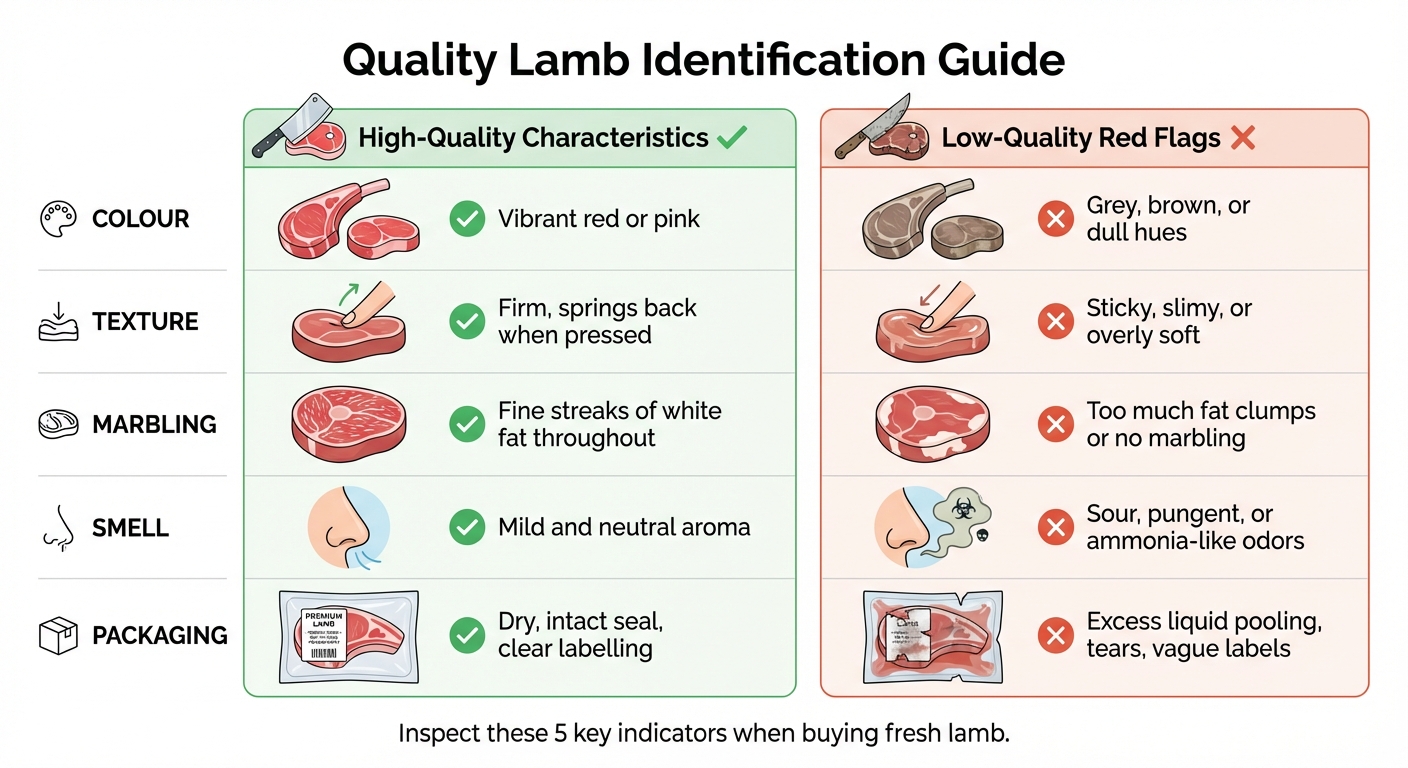
How to Identify Quality Fresh Lamb: Visual Guide to High-Quality vs Low-Quality Indicators
Choosing quality lamb at the butcher’s counter doesn’t have to feel overwhelming. With a few simple checks, you can confidently spot the best cuts without needing to be an expert.
Visual and Texture Checks
Start by looking at the colour. Fresh, high-quality lamb typically has a vibrant red or pink hue. If the meat looks grey or brown, it’s a sign that it’s been sitting out for too long or has started to oxidise. Next, check the marbling - those fine white streaks of fat running through the meat. Good marbling adds flavour and tenderness. Steer clear of cuts with excessive fat clumps or no marbling at all.
The surface should look clean and even, without any dull or discoloured patches. For a hands-on check, press the meat gently. It should feel firm and bounce back quickly. If your finger leaves an indentation, it might not be fresh. Additionally, avoid meat that feels sticky or slimy, as this could indicate spoilage.
Once you’ve assessed the appearance and texture, it’s time to check the aroma and packaging for more clues about freshness.
Smell and Freshness Tests
Fresh lamb has a neutral, mild scent. Any sour, pungent, or ammonia-like odours are red flags for spoilage. Don’t hesitate to ask the butcher questions about the lamb’s history. For example, has it been previously frozen? Where was it sourced? In places like Al Barari, transparency is common practice, so asking these questions helps ensure you’re getting what you’re paying for.
Finally, take a close look at the packaging. A high-quality cut will have an intact seal, minimal liquid pooling, and clear "sell by" or "use by" dates. Even if the meat looks fine, unclear labelling or excessive liquid can indicate it’s past its prime.
| Indicator | High-Quality Characteristic | Low-Quality Red Flag |
|---|---|---|
| Colour | Vibrant red or pink | Grey, brown, or dull hues |
| Texture | Firm, springs back | Sticky, slimy, or overly soft |
| Marbling | Fine streaks of white fat | Too much fat or no marbling |
| Smell | Mild and neutral | Sour, pungent, or ammonia-like |
| Packaging | Dry, intact, clear labelling | Excess liquid, tears, vague labels |
Taking the time to inspect these details ensures you’re selecting lamb that meets the high standards of Dubai’s premium meat markets.
sbb-itb-3031837
Ethical and Responsible Lamb Sourcing in Dubai
In Dubai's premium meat market, ethical sourcing is just as crucial as quality. For consumers who prioritise both taste and values, the way lamb is sourced and raised matters as much as its appearance on the plate. Ensuring ethical practices means the meat aligns with religious guidelines and sustainable principles. This focus forms the backbone of responsible sourcing standards.
Halal Certification in the UAE
Halal certification is a must in Dubai. Opt for Zabiha-certified, stun-free, hand-slaughtered meat to meet stringent religious and ethical requirements. Certification from organisations like Halal Monitoring Services (HMS) guarantees the meat is prepared in facilities adhering to strict standards without stunning. The Tayyib principle further ensures the meat is pure, wholesome, and raised in a way that respects the environment.
"Tayyib is inseparable from how food is raised. Regenerative farming restores the land as an act of amanah (stewardship), producing meat that is not only halal in form, but pure, nourishing, and beneficial in substance." - Halal-N-Tayyib Meats
Additionally, certifications such as Global Animal Partnership (G.A.P) or labels like "True Aussie Beef and Lamb" confirm the meat is 100% Halal and traceable to its Australian origins.
Grass-Fed vs. Grain-Fed Lamb
What lambs eat plays a big role in both quality and environmental impact. Grass-fed lamb, often imported from Australia or the UK, tends to have higher levels of omega-3 fatty acids and vitamins compared to grain-fed options. Grazing on open pastures not only benefits the lamb's diet but also supports land regeneration and healthier soil.
In Al Barari, premium choices include Australian Grass-Fed Lamb Rack, priced between 190 AED/kg and 210 AED/kg, and Organic English Heritage Lamb Shoulder, available at around 228 AED/kg. For added peace of mind, look for labels like "hormone-free", which confirm the lamb was raised without antibiotics, steroids, or GMOs. When organic meat is preferred, always verify its certification.
Traceability in Meat Sourcing
Traceability is key to building trust in the meat supply chain. Suppliers in Al Barari, such as Fin & Bone, emphasise direct sourcing from farms, cutting out middlemen and reducing the distance food travels.
"Transparency & Traceability for us means that our customers have the right to know exactly where the food comes from." - Fin & Bone
To ensure ethical standards are met, choose suppliers with open workspaces where you can observe the meat handling process. Look for clear product labels that specify the origin of the meat. This level of transparency reassures you that the lamb you’re buying meets the highest ethical and quality standards.
Fin & Bone: Al Barari's Lamb Supplier
For residents of Al Barari who appreciate premium lamb with a focus on transparency, Fin & Bone is the go-to destination. Located in Seventh Heaven, this butchery blends craftsmanship with traceability, ensuring every cut meets high standards of quality and origin. With a dedication to ethical practices and exceptional offerings, Fin & Bone has carved out a reputation as a top choice for lamb lovers in the area.
Lamb Cuts at the Butcher's Counter
At the heart of Fin & Bone is its butcher's counter, showcasing heritage and pasture-raised lamb in a variety of cuts. For those who love quick, easy cooking, loin chops are a lean and tender option, ideal for pan-searing or grilling. If you're after something richer, rib chops and racks boast higher fat content, making them perfect for roasting or searing. Prefer slow-cooked dishes? Shoulder chops (both blade and arm cuts) deliver bold flavours, especially when marinated with acidic ingredients like lemon juice for at least an hour before cooking.
The selection doesn’t stop there. You'll also find lamb mince, house-made sausages, and specialty options like King Ross Lamb (English Heritage), Organic Grass Fed Lamb and grass-fed UK heritage lamb, which rotate based on availability.
Leading the butchery is Richard Douglas, whose experience spans luxury establishments such as The Lana (Dorchester Collection) and The Abu Dhabi Edition. Using traditional butchery methods in full view of customers, Douglas ensures every cut aligns with Fin & Bone’s promise of quality and sustainability. For best results, let lamb chops sit at room temperature for 30 minutes before cooking. Each cut reflects the shop's commitment to ethical practices, reinforcing its status in Dubai's premium meat market.
Ethical Sourcing Practices
Fin & Bone's dedication to sustainability goes beyond offering diverse cuts. The butchery collaborates with trusted local and international farmers who specialise in pasture-raised, heritage breeds. This partnership guarantees full traceability for every product sold.
"Sustainably sourced from trusted farms. Each cut meets the highest standards of ethics and quality." - Fin & Bone
For those with specific culinary requests, Fin & Bone provides a bespoke sourcing service, ensuring even hard-to-find cuts or varieties can be procured. Additionally, their premium meats undergo a dry-aging process lasting between 45 and 90 days, enhancing both flavour and tenderness.
Shopping Convenience and Product Transparency
Fin & Bone operates with an open workspace policy, allowing customers to observe the meat preparation process firsthand. Every product is clearly labelled with its origin, and knowledgeable staff are on hand to explain the unique qualities of each variety. For instance, King Ross Lamb (English Heritage) offers a mild, delicate flavour, while grass-fed UK heritage lamb provides a more robust taste profile. This level of transparency builds trust and reinforces the shop’s focus on provenance.
"Designed for home chefs who value quality, provenance, and flavour, Fin & Bone combines craftsmanship with ingredients that elevate every meal." - Al Barari Retail
In addition to premium meats, the shop offers house-made rubs and pickles, pantry staples like 50-year-aged balsamic vinegar, and professional-grade tools, including handcrafted Japanese knives from Kuto. Whether you shop in-store daily from 9 AM to 10 PM or order online through their website for home delivery, Fin & Bone makes premium dining accessible and convenient.
Storing and Handling Lamb Properly
When you invest in premium lamb, especially in Dubai's warm climate, proper storage is key to maintaining its quality and ensuring safety. Handling it with care not only preserves its flavour but also reflects the ethical sourcing behind your choice.
Refrigeration and Freezing Methods
Fresh lamb should go straight into the coldest part of your fridge, ideally set between 1.6°C and 4.4°C (35–40°F). To avoid cross-contamination, place it on a plate or tray rather than directly on the shelf.
"The first rule of thumb, and probably the most important for safety, is to never allow the lamb to be exposed to heat until cooking, or to be left out at room temperature." - Saad Fayed, Restaurateur and Food Writer
If you're freezing lamb, ensure your freezer is set to 0°C (32°F) or below. For storage beyond two months, repackage the lamb - vacuum sealing works best - to prevent freezer burn. Don't forget to label each package with the freezing date to track its shelf life.
Following these guidelines ensures your lamb stays safe and flavourful until you're ready to prepare it.
Shelf Life and Timing
Fresh lamb cuts like chops and roasts can be stored in the refrigerator for 3 to 5 days, while ground lamb and stew meat need to be used within 2 days. Cooked lamb leftovers, when refrigerated, should be consumed within 3 days. For longer storage, lamb chops and roasts retain their quality in the freezer for 6 to 9 months, ground lamb for 4 months, and cooked lamb for up to 3 months.
Always inspect your lamb upon delivery, as suppliers typically don't accept responsibility for spoilage after 24 hours. Premium suppliers rely on temperature-controlled delivery systems to ensure chilled items arrive cold and frozen items remain solid, maintaining the cold chain from their shop to your kitchen.
Cooking Lamb: Tips for Dubai Kitchens
Once your premium lamb is stored correctly, it's time to turn it into a mouthwatering dish, tailored to Dubai's climate and culinary heritage. Whether you're whipping up a quick dinner or hosting a traditional gathering, mastering temperature control and using regional spices can make your lamb dishes shine. Cooking with care and flavourful spices celebrates the journey of your lamb from Al Barari to your plate.
Simple Lamb Recipes
To achieve perfectly tender and juicy lamb, aim for an internal temperature of 54°C–60°C (130°F–140°F). Use an instant-read thermometer for accuracy.
"You always want to take the lamb off the heat about 5-10 degrees short of doneness because the meat will continue to cook while it rests." - Emily Paster, Author
For those busy evenings, lamb chops are perfect for quick pan-searing or grilling. Ground lamb can be transformed into Arayes - a Middle Eastern classic where spiced minced lamb is stuffed into pita bread and grilled until crispy. This dish is ready in under 15 minutes. If you're in the mood for something more traditional, try Emirati favourites like Machboos (spiced lamb and rice) or Salona (a hearty lamb stew with seasonal vegetables). These one-pot dishes are not only convenient but also help retain moisture, which is especially important in Dubai's dry climate.
For tougher cuts like shoulder or shank, slow-cooking is key. Braising these cuts in liquid over low heat breaks down the connective tissues, resulting in meat so tender it falls off the bone. If you're short on time, electric pressure cookers are a fantastic alternative, delivering similar results quickly - an excellent choice for Dubai's fast-paced kitchens.
No matter the recipe, elevate your lamb dishes with the bold flavours of Middle Eastern spice blends.
Pairing Lamb with Middle Eastern Spices
Emirati lamb dishes often feature a symphony of warm spices like saffron, cardamom, turmeric, and cinnamon.
For grilled lamb chops, a dry rub of sumac, cumin, and paprika creates a deliciously spiced crust. Sumac, with its sharp, lemony tang, is particularly useful as it adds flavour without extra moisture, making it ideal for dishes like kofta. Za'atar - a blend of dried thyme, sumac, and sesame seeds - is another versatile option. It can be used as a rub or as a finishing touch and is readily available at the Dubai Spice Souk for 15–30 AED per 100g.
Yogurt-based marinades, enhanced with cardamom and cumin, work wonders for tenderising tougher cuts like lamb shoulder, while also infusing them with rich flavour. For slow-cooked dishes like tagines or stews, consider adding dried fruits such as apricots or raisins. When paired with cinnamon and ginger, these ingredients introduce a subtle sweetness that balances the savoury lamb beautifully. For an authentic Dubai-inspired touch, garnish your dish with chopped mint and a sprinkle of sumac before serving.
Conclusion
Buying fresh lamb in Dubai’s Al Barari neighbourhood is more than just a transaction - it’s about recognising quality, expecting transparency, and supporting ethical practices that elevate your culinary experiences. From inspecting the meat for freshness to ensuring full traceability, every step guarantees you're bringing home lamb that meets the highest standards. This guide has highlighted how these thoughtful choices can make a real difference.
Over half of home cooks agree that high-quality ingredients are the cornerstone of successful meals. When you choose lamb from a butcher who prioritises transparency, you gain access to options like heritage breeds, grass-fed selections, and meats prepared with care - such as dry-aging for 45 to 90 days to enhance flavour and tenderness.
Fin & Bone in Al Barari is a great example of this commitment. With open workspaces where you can watch the preparation process, a rotating selection of premium lamb sourced from Spain and the UK, and partnerships with local farmers who share values of sustainability, they make it simple to source responsibly. Whether it’s grass-fed lamb shanks or organic English Heritage Lamb shoulder, you’re choosing flavour and provenance that can transform your home-cooked meals.
As you store, handle, and cook your lamb using the techniques outlined in this guide, remember that quality starts with informed decisions. Proper storage, precise cooking temperatures, and the right spice combinations all tie back to the foundation of ethical sourcing and complete transparency. Look for suppliers who provide clear labelling, showcase their craftsmanship, and embrace transparency - because unforgettable meals begin with exceptional ingredients.
FAQs
How can I identify high-quality lamb in Al Barari?
To choose top-notch lamb in Al Barari, start by checking its appearance. Fresh lamb typically has a rich, natural colour without any signs of discolouration or dryness. Next, consider the texture - the meat should feel firm and springy, not overly soft or mushy. A clean, mild smell is also a reliable indicator of freshness and good handling.
For those who prioritise quality, the source of the lamb matters greatly. The best lamb often comes from trusted farms that prioritise ethical and sustainable practices, such as pasture-raising or using heritage breeds. These approaches not only enhance the flavour and tenderness of the meat but also ensure responsible farming methods.
By paying attention to these key aspects - colour, texture, aroma, and sourcing - you can confidently pick the finest lamb in Al Barari.
How does Fin & Bone ensure their lamb is ethically sourced?
Fin & Bone takes pride in sourcing lamb responsibly by collaborating with reputable farms that value transparency and traceability. This commitment ensures that every piece of meat upholds strict standards for quality while aligning with responsible and sustainable practices.
By prioritising ethical sourcing, Fin & Bone works with farmers who embrace humane and eco-friendly methods. This guarantees that customers in Dubai enjoy fresh, top-tier lamb they can rely on with confidence.
How should I store and handle fresh lamb in Dubai's warm climate?
To keep lamb fresh and safe in Dubai's warm climate, proper storage and careful handling are key. Always refrigerate fresh lamb at temperatures between 0°C and 4°C. Leave it in its original packaging or wrap it securely in plastic or foil to prevent leaks and contamination. If you plan to cook it within two days, place it on a plate or in a sealed container to keep it safe.
For longer storage, freezing works best. Make sure to wrap the lamb in airtight packaging to prevent freezer burn. Properly stored, it can last in the freezer for up to 6–9 months. When it's time to defrost, do so in the refrigerator or use cold water - never leave it out at room temperature. Dubai's heat can quickly lead to bacterial growth if lamb is left out too long. Lastly, always cook lamb thoroughly to the recommended internal temperature to ensure both safety and great flavour.


