

Eating high-quality protein is essential for supporting muscle growth, maintaining energy, and improving overall health. Not all proteins are the same - complete proteins with all nine essential amino acids, high digestibility, and efficient absorption provide the best results. Here's why it matters:
- Muscle Health: Helps repair and grow muscles, especially after exercise.
- Weight Management: Boosts metabolism, reduces hunger, and aids fat loss.
- Bone Strength: Supports bones and cartilage, especially for adults over 50.
- Energy Levels: Stabilizes blood sugar and prevents energy crashes.
For the best results, choose ethically sourced options like grass-fed beef, wild-caught fish, and free-range poultry, or pair plant-based proteins like quinoa and lentils for a complete amino acid profile. Spread your intake across 3–5 meals daily, aiming for 20–30 g of protein per meal. Proper timing, such as post-workout or before bed, can maximize benefits.
In the UAE, finding premium protein is easier with options like Silver Fern Farms grass-fed beef or MSC-certified seafood. Ethical sourcing supports quality, safety, and local values, ensuring your choices benefit both your health and the planet.
Health Benefits of High-Quality Protein
Choosing traceable, premium protein isn’t just about taste - it’s about supporting your body’s essential functions. From muscle repair to metabolism, bone strength, and energy levels, the benefits of high-quality protein are undeniable.
Muscle Development and Recovery
Your muscles depend on all nine essential amino acids to repair and grow, and high-quality protein provides them in the right balance. After resistance training, consuming 20 g of complete protein (with approximately 8.6 g of essential amino acids) helps maximise muscle synthesis. This is especially critical for older adults, who may need 1.0 to 1.2 g of protein per kilogram of body weight to combat anabolic resistance and maintain muscle mass.
Leucine, a key amino acid, plays a major role in muscle growth by activating mTORC1. Seniors should aim for 2.5–3 g of leucine per meal to counteract anabolic resistance. Foods like grass-fed beef, wild-caught fish, and free-range poultry are excellent sources of leucine compared to processed protein options.
"Skeletal muscle protein turnover plays an important role in maintaining energy balance, as both muscle protein synthesis and breakdown require energy in the form of ATP." - Robert R. Wolfe, PhD, Department of Geriatrics, University of Arkansas for Medical Sciences
Instead of consuming most of your protein during dinner, spread 25 to 30 g across four to five meals daily. This not only keeps your body in a steady anabolic state but also enhances post-workout recovery. Consuming protein right after exercise shifts your body from breaking down muscle to repairing it, improving overall muscle health while positively impacting metabolism and bone strength.
Metabolism and Weight Management
Protein has a much higher thermic effect (20–30% of calories) compared to carbohydrates (5–10%) and fats (0–3%). In simple terms, your body burns more energy digesting a grilled salmon fillet than it does breaking down rice or olive oil.
A 2012 study highlighted this impact: a diet with 25% protein increased muscle mass by 2.9 kg, whereas a 5% protein diet led to muscle loss and a 3.4 kg fat gain. This shows how protein quality can influence body composition, even with a calorie surplus.
High-quality protein also helps control hunger by boosting satiety hormones like GLP-1 and CCK while reducing ghrelin (the hunger hormone) by 22–34%. Eating 30% of your calories from protein can naturally reduce your daily intake by about 441 kilocalories. To maintain a healthy weight, aim for 1.2 to 1.6 g of protein per kilogram of body weight, and combine this with resistance training to preserve muscle while shedding fat.
Bone and Cardiovascular Health
Protein isn’t just a building block for muscle - it’s essential for maintaining strong bones and cartilage. Adequate protein intake, especially of essential amino acids, helps keep skeletal muscle mass intact, which in turn strengthens bones through regular movement and activity. Adults over 50 should consider increasing their protein intake to 1.0 to 1.2 g per kilogram of body weight to support both muscle and bone health.
Sustainably caught fish like salmon and mackerel provide omega-3 fatty acids that benefit heart health. These sources stand in stark contrast to processed meats, which are often linked to cardiovascular risks due to high levels of saturated fat and sodium. For lean protein options, consider skinless chicken breast or grass-fed beef that’s at least 90% lean - these deliver the benefits of protein without compromising heart health.
"Maintaining the metabolic function of muscle is central to avoiding metabolic syndrome and type 2 diabetes, since muscle is the primary site of glucose clearance from plasma." - Robert R. Wolfe, PhD
For plant-based eaters, pairing incomplete proteins like lentils with quinoa ensures a full amino acid profile while adding fibre. One cup of cooked quinoa provides about 8 g of protein and 5 g of fibre, making it a nutrient-packed addition to any meal.
Blood Sugar Control and Energy Levels
Muscle tissue plays a critical role in regulating blood sugar by clearing glucose from the bloodstream. Consuming enough high-quality protein helps maintain muscle mass, which in turn supports efficient blood sugar control. Protein also slows the digestion of carbohydrates, preventing sharp glucose spikes that can lead to energy crashes and cravings.
This effect is particularly helpful for those managing demanding schedules in cities like Dubai and Abu Dhabi. Starting your day with a 40 g protein breakfast can reduce afternoon snacking by up to 32%, keeping energy levels steady throughout the day. Complete proteins, like eggs, dairy, and lean meats with Digestible Indispensable Amino Acid Scores (DIAAS) of 100 or more, ensure efficient absorption and minimal waste. This efficiency translates to sustained energy, improved focus, and better metabolic health overall.
sbb-itb-3031837
Choosing the Best High-Quality Protein Sources
Finding top-notch protein in the UAE goes beyond checking prices or flashy marketing. It's about knowing where your food comes from and understanding how it’s raised or sourced.
Animal-Based Protein Sources
When it comes to grass-fed beef, options from New Zealand and Australia are hard to beat. For example, Silver Fern Farms Reserve grass-fed beef - where only 4% of carcasses meet the standard - provides higher levels of omega-3s, CLA, and vitamins A and E. You can find this premium beef at specialty retailers for around Dhs. 940.00 per 4.7 kg.
For seafood, freshness and origin are non-negotiable. High-quality seafood is flown in from Japan and the UK on fixed schedules - Tuesdays and Thursdays - ensuring peak freshness and full traceability. Meanwhile, free-range poultry offers about 31 g of protein per 100 g, making it another solid option for your diet.
Plant-Based Protein Options
Animal proteins may pack a punch, but plant-based options bring their own benefits, including fibre and essential amino acids.
- Quinoa is a standout, as it contains all nine essential amino acids. A cooked cup delivers about 8 g of protein and 5 g of fibre.
- Lentils provide roughly 18 g of protein per cooked cup, while chickpeas offer around 15 g, along with benefits like stable blood sugar levels.
- Seitan, a protein-rich option, delivers about 25 g of protein per 100 g serving and is widely available in UAE stores like Spinneys, Carrefour, and Waitrose.
For a complete protein profile, combine plant-based options. For instance, pair rice with beans or hummus with pita to get all essential amino acids.
Importance of Traceability and Transparency
Ethical sourcing and traceability are crucial when choosing your protein. Look for certifications like "True Aussie Beef and Lamb", "Certified Angus Beef", or "Silver Fern Farms" to ensure quality and ethical practices. The best options often carry both grass-fed and organic labels, guaranteeing nutrient density without exposure to synthetic chemicals or hormones.
In Dubai, some suppliers have adopted farm-to-fork systems, maintaining strict biosecurity and food safety standards. Many even offer delivery within 2 to 3 hours, ensuring freshness while providing full transparency about sourcing. This commitment to clear sourcing not only enhances your nutrition but also aligns with the growing focus on sustainability in premium protein choices across the UAE.
Recommended Protein Intake and Timing
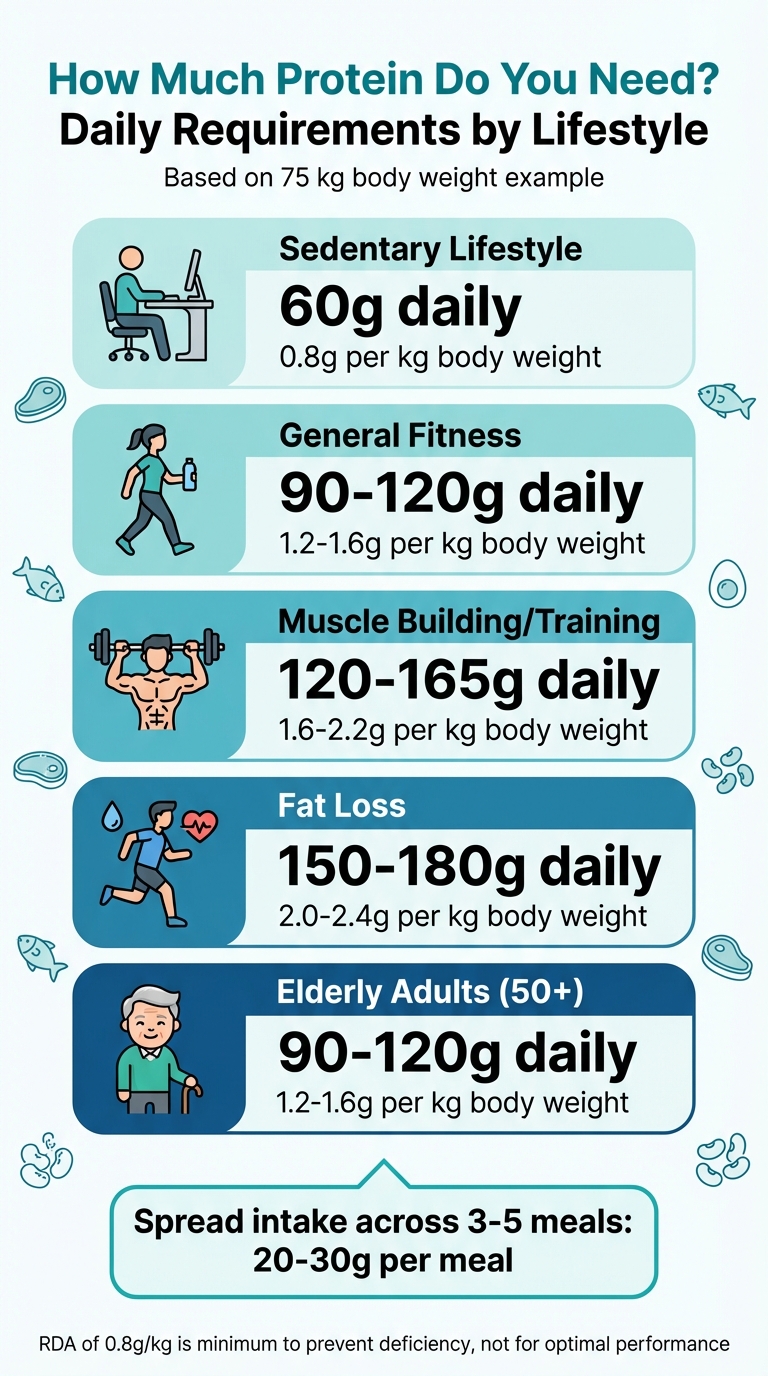
Daily Protein Requirements by Lifestyle and Activity Level
Protein Requirements for Different Lifestyles
How much protein you need depends on your activity level and goals. The Recommended Daily Allowance (RDA) of 0.8 g per kilogram of body weight is simply the minimum to prevent deficiency - it doesn’t necessarily support peak performance or weight management.
Here’s an example for someone weighing 75 kg:
- Sedentary Lifestyle: 60 g daily
- General Fitness: 90–120 g daily
- Muscle Building/Training: 120–165 g daily
- Fat Loss: 150–180 g daily
- Elderly Adults: 90–120 g daily
"Most active adults need between 1.6–2.2 g of protein per kg of bodyweight per day. For someone at 75 kg, that's up to 165 g of protein daily." – Right Bite
For instance, if you’re a 70 kg active professional, multiplying your weight by 1.6–2.2 gives you a range of 112–154 g daily. To hit this target, aim to spread your intake evenly across meals - about 20–30 g per meal - and add protein-rich snacks as needed.
Once you understand your daily protein needs, it’s time to focus on timing your meals to maximise absorption and recovery.
Meal Timing for Better Results
Instead of focusing solely on the post-workout "anabolic window", it’s more effective to spread your protein intake across 3–5 meals throughout the day. Aim for 20–30 g of protein per meal every 3–4 hours. This approach helps maintain steady energy levels and prevents the mid-afternoon slump often caused by carbohydrate-heavy meals.
"A high-protein breakfast keeps you genuinely full through a morning of back-to-back meetings in a way a carbohydrate-heavy one simply does not." – Right Bite
Post-workout protein is still key - consume 20–30 g within 1–2 hours of finishing your session to support muscle recovery. To further enhance overnight muscle repair, have 40 g of slow-digesting casein protein about 30 minutes before bed. This helps sustain muscle protein synthesis while you sleep. Even the highest quality, ethically sourced proteins work best when timed correctly throughout the day.
Conclusion: Making Informed Protein Choices
Your protein choices can now reflect both a focus on nutrition and a commitment to sustainability. Selecting high-quality protein isn’t just about meeting daily intake - it’s about accessing better nutrients and supporting ethical practices. For example, grass-fed beef offers higher levels of vitamin E and a better omega-3 to omega-6 ratio, while wild-caught seafood provides a cleaner source of protein with fewer contaminants and more omega-3 fatty acids compared to farmed options. These choices contribute to improved muscle function, metabolism, and heart health.
Consider options like MSC-certified seafood or organic, antibiotic-free poultry to avoid unnecessary additives and support sustainable practices. The blue MSC label on seafood packaging or certifications for grass-fed and organic meat can guide you in making responsible choices. Such decisions align with the UAE’s focus on food safety, ethical sourcing, and environmental awareness.
"Sustainable seafood gives you a cleaner protein, with more dense nutrients and fewer additives. It's kind not only to your body but the environment, too." – Naledi Toona, Chef and MSC Ambassador
To ensure a well-rounded diet, diversify your protein sources. Combine poultry, red meat, seafood, and plant-based options like quinoa or legumes to achieve a complete amino acid profile. For instance, wild salmon provides 26.5 g of protein per 100 g along with heart-friendly omega-3s, while chicken breast delivers up to 31 g per 100 g and is easy to digest. Spreading these protein sources across 3–5 meals throughout the day helps maximise absorption and maintain consistent energy levels.
FAQs
How do I tell if a protein is “high‑quality”?
High-quality protein is defined by its ability to deliver all essential amino acids in the correct ratios while being easy to digest. Metrics like the biological value (BV) and the protein digestibility corrected amino acid score (PDCAAS) help measure this quality. When these standards are met, the protein effectively supports muscle development, boosts metabolism, and contributes to overall health.
How much protein should I eat per day for my goal?
Your daily protein intake depends on factors like your goals, activity level, and weight. For general health, adults should aim to consume about 0.8 grams of protein per kilogram of body weight. However, if you're working on building muscle or managing your weight, the recommendation increases to 1.2–2.0 grams per kilogram.
Let’s break it down with an example: If you weigh 70 kg and your goal is to build muscle, you’d need between 84 and 140 grams of protein each day.
To get the most out of your diet, focus on high-quality and sustainable protein sources. This not only supports your health but also contributes to a more balanced approach to nutrition.
What are easy ways to get complete protein on a plant‑based diet?
To ensure you're getting complete protein on a plant-based diet, combine foods that provide complementary amino acids. For example, pairing legumes like beans or lentils with grains such as rice or quinoa works perfectly. Incorporating a variety of protein-rich options like soy products (tofu, tempeh), nuts, seeds, and whole grains into your meals is key. This approach helps maintain a balanced intake of essential amino acids, which are crucial for muscle growth, immune support, and overall well-being.


