

When choosing between grass-fed and grain-fed beef, the decision often comes down to taste, nutrition, price, and personal values. Here’s a quick breakdown:
- Grass-fed beef: Cattle eat grass throughout their lives. The meat has a bold, earthy flavour, is leaner, and contains higher omega-3s, CLA, and vitamins like E and beta-carotene. It’s more expensive, costing AED 97–161/kg in the UAE.
- Grain-fed beef: Cattle are finished on a high-grain diet in feedlots. The meat is tender, rich, and buttery, with more marbling. It’s more affordable, priced at AED 49–81/kg.
Quick Comparison:
| Feature | Grass-Fed Beef | Grain-Fed Beef |
|---|---|---|
| Diet | Grass, hay, forage | Corn, soy, grain by-products |
| Taste | Bold, earthy, nutty | Rich, buttery, mild |
| Texture | Leaner, firmer | Tender, more marbled |
| Nutrition | Higher omega-3s, CLA, vitamins | More monounsaturated fats |
| Price (AED) | 97–161/kg | 49–81/kg |
| Environmental Impact | Longer lifespan, higher methane | Efficient feed-to-meat ratio |
Grass-fed beef appeals to health-conscious eaters and those seeking leaner, nutrient-rich meat. Grain-fed beef is ideal for those who prefer tender, marbled cuts at a lower price. Your choice depends on your taste, health goals, and budget.
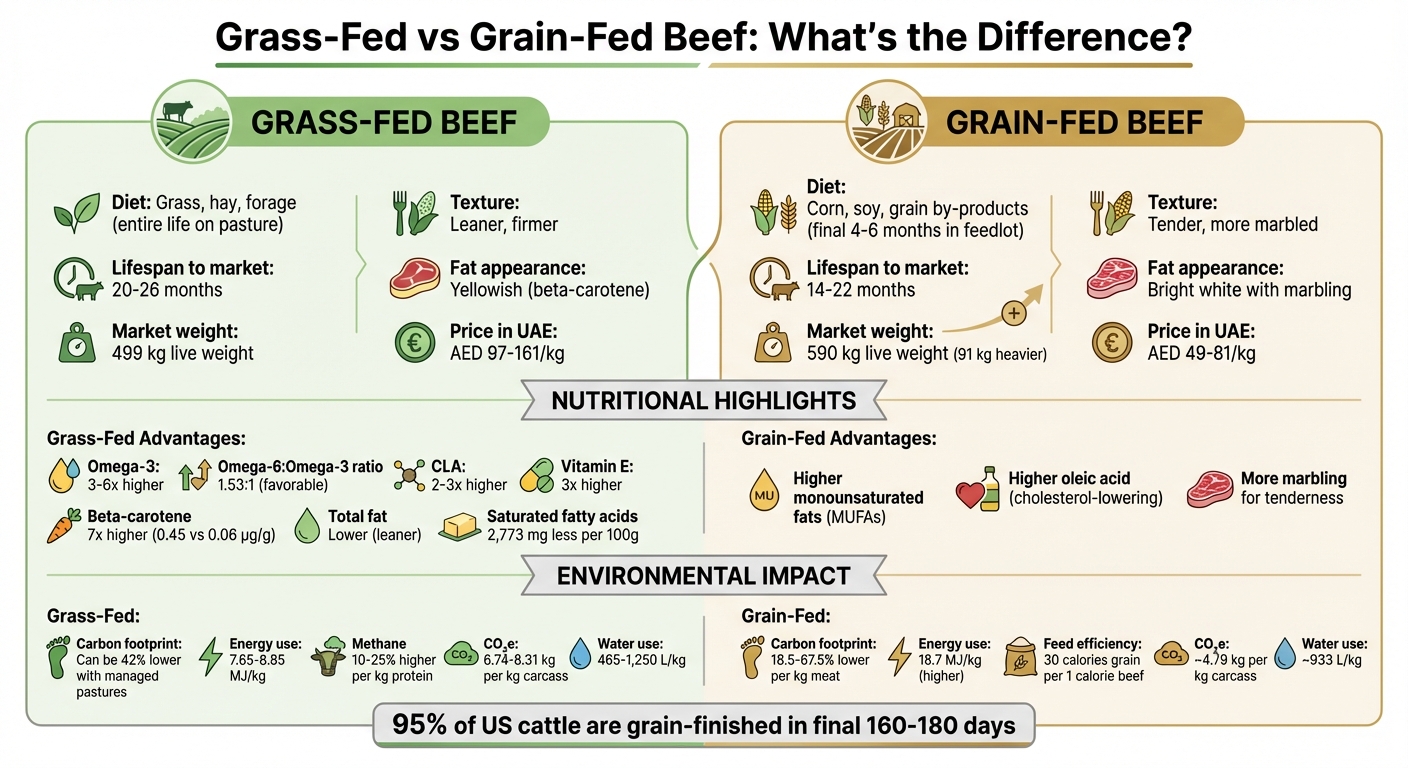
Grass-Fed vs Grain-Fed Beef: Complete Comparison Guide
Grain-Fed vs. Grass-Fed Beef Diagram: 2025 Cut, Cost, & Yield
sbb-itb-3031837
How Cattle Are Raised and Fed
Beef cattle start their lives with a similar upbringing, but their paths split as they grow. Some stay on pasture, while others transition to a grain-based finishing process. This difference shapes the unique characteristics of grass-fed and grain-fed beef.
Grass-Fed Cattle: A Life on Pasture
Grass-fed cattle spend their entire lives grazing on pasture and eating grass, hay, or silage, from birth until they are ready for harvest. Living outdoors means they are exposed to natural weather conditions, which slows their growth compared to cattle raised in feedlots. To ensure they grow steadily, farmers provide forage with 14–18% crude protein and at least 65% digestibility, allowing for a daily weight gain of about 0.9 kg.
Since grass offers less energy than grain, grass-fed cattle take longer to reach market weight - typically 20–26 months. By this time, they weigh around 499 kilogrammes live. Breeds like Angus, which mature quickly at lighter weights, are particularly suited for this method.
Grain-Fed Cattle: A High-Energy Finish
Grain-fed cattle begin their lives on pasture but eventually move to feedlots - large, concentrated facilities - where they spend their final 4–6 months. Here, they are fed a high-energy diet consisting primarily of corn and soy, along with essential nutrients.
"Grain contains more energy allowing cattle to maintain greater growth rates later in their lives when compared to feeding only grass or forage." – Penn State Extension
This energy-rich diet helps grain-fed cattle gain weight faster, reaching market readiness much sooner - usually at 14–22 months. On average, they weigh about 590 kilogrammes at this stage, which is roughly 91 kilogrammes heavier than grass-fed cattle. The grain-based diet also enhances intramuscular fat, or marbling, which gives the meat its tender texture and rich flavour that many consumers prefer. In fact, approximately 95% of cattle in the United States are finished on grain during the last 160 to 180 days of their lives.
Flavour and Texture Differences
The way cattle are fed plays a big role in shaping the flavour and texture of beef. Each feeding method leaves its unique imprint on the meat.
Grass-fed beef is known for its complex, earthy taste, often with a hint of nuttiness from the variety of plants in the cattle's diet. Some people describe it as having a slightly gamey edge, which adds to its bold, "beefier" flavour. The meat itself tends to be a deeper red colour, thanks to its higher iron content, and the fat often takes on a yellowish hue due to beta-carotene.
On the other hand, grain-fed beef delivers a buttery, richer, and sweeter flavour profile. This is largely due to the high-fat, high-sugar diet of grains like corn and soy, which enhances intramuscular marbling. The result? Meat that’s exceptionally tender, with a paler colour and a more consistent, mild flavour.
"Grass-fed beef is considered to have a more complex flavour that reflects the natural diets of the cattle." – Prime Gourmet
Texture also sets the two apart. Grass-fed beef, being leaner, has a firmer bite and cooks faster, which means it can easily become tough if overcooked. In contrast, the marbling in grain-fed beef acts as a natural insulator during cooking, keeping the meat tender and juicy.
When it comes to taste preferences, opinions are divided. Some people enjoy the mild, buttery notes of grain-fed beef, while others prefer the bold, nutty complexity of grass-fed beef.
Nutritional Content and Health Effects
The diet of cattle doesn't just influence the flavour and texture of beef - it plays a key role in shaping its nutritional value and potential health effects.
Nutritional Comparison
How cattle are fed has a direct impact on the nutritional makeup of the beef. Grass-fed beef is naturally leaner and contains fewer calories per 100 g compared to grain-fed beef. For example, a 100-gram serving of grass-fed beef has about 2,773 mg less total saturated fatty acids than its grain-fed counterpart.
Grass-fed beef stands out in its omega-3 fatty acid levels, offering 3 to 6 times more than grain-fed beef. The omega-6 to omega-3 ratio is another key factor: grass-fed beef boasts a favourable ratio of about 1.53:1, while grain-fed beef has a much higher ratio of 7.65:1. Why does this matter? An imbalanced ratio, like the one found in grain-fed beef, is linked to increased inflammation and a higher risk of chronic diseases.
Additionally, grass-fed beef delivers 2 to 3 times more conjugated linoleic acid (CLA), which has been associated with benefits like reduced body fat and a lower risk of diabetes. It’s also rich in beta-carotene - up to 7 times higher than grain-fed beef (0.45 μg/g compared to 0.06 μg/g). This gives the fat a yellowish hue and provides a valuable source of Vitamin A precursors. On top of that, grass-fed beef contains roughly 3 times more Vitamin E than grain-fed beef.
| Nutrient | Grass-Fed Beef | Grain-Fed Beef |
|---|---|---|
| Total Fat | Lower (leaner) | Higher (more marbling) |
| Omega-3 Content | 3x to 6x higher | Lower |
| Omega-6:Omega-3 Ratio | ~1.5:1 (favourable) | ~7.6:1 (less favourable) |
| CLA Content | 2x to 3x higher | Lower |
| Vitamin E | ~3x higher | Lower |
| Beta-Carotene | Up to 7x higher | Lower |
On the other hand, grain-fed beef contains higher levels of monounsaturated fatty acids (MUFAs), particularly oleic acid. This fatty acid is known for its cholesterol-lowering properties and may even help reduce the risk of stroke.
These differences in nutrients lead to distinct health effects.
Health Considerations
For those focused on heart health and weight management, grass-fed beef holds distinct advantages. Its lower fat content translates to fewer calories per gram, and it contains more stearic acid - a saturated fat that doesn’t raise blood cholesterol levels. In contrast, grain-fed beef has higher levels of cholesterol-raising saturated fats like palmitic and myristic acids.
The anti-inflammatory benefits of grass-fed beef, driven by its higher omega-3 levels and better fatty acid ratio, make it a strong choice for anyone concerned about chronic inflammation.
However, if you prefer tender, marbled cuts, grain-fed beef might be more appealing. Its higher fat content and MUFA levels still offer some cardiovascular benefits, particularly oleic acid. Opting for lean cuts and trimming visible fat can help reduce cholesterol and saturated fat intake even further.
Environmental Impact and Farming Practices
The environmental impact of beef production hinges on factors like cattle rearing methods, diet, and lifespan. These considerations add depth to earlier discussions on flavour and nutrition, offering valuable insights for those seeking high-quality beef.
Grass-Fed Beef and Land Use
Grass-fed cattle primarily graze on pasture, converting non-edible plants into protein. This approach utilises marginal lands unsuitable for crops, making it a practical choice in many regions. When managed effectively, rotational grazing not only supports soil health but also aids in carbon sequestration. Research from Oklahoma State University highlights that managed pastures can cut grass-finished beef’s carbon footprint by up to 42%. However, these benefits vary depending on local conditions and management practices.
"Managing cattle on pasture in a grass-finishing system to me epitomises animal welfare."
– Jason Rowntree, Michigan State University
That said, grass-fed cattle take longer - about 20–26 months - to reach market weight, leading to higher methane emissions. Some studies estimate that their emissions per kilogram of protein are 10%–25% higher than those of grain-fed systems. For instance, a California study found that grass-fed systems emit between 6.74 and 8.31 kg CO₂e per kilogram of carcass weight, compared to around 4.79 kg CO₂e for conventional grain-fed beef.
Energy use also differs. Grass-fed systems require significantly less energy - around 7.65 to 8.85 MJ per kilogram of hot carcass weight - because they bypass the energy-intensive process of feed production. In contrast, grain-fed beef production demands about 18.7 MJ per kilogram.
Grain-Fed Beef and Resource Efficiency
Grain-fed cattle are raised in feedlots, where their high-energy diet accelerates weight gain. This method allows them to reach market weight faster, improving production efficiency and reducing their carbon footprint by 18.5% to 67.5% compared to grass-finished beef.
"Grain-finished beef has a lower carbon footprint than grass-finished beef due to more efficient utilisation of feed in the finishing phase, fewer days on feed, and greater amount of beef produced per animal."
– Ashley Broocks et al., Oklahoma State University
However, this efficiency comes at a cost. Producing one calorie of feedlot beef requires about 30 calories of grain. Additionally, growing feed crops demands high-quality farmland, significant irrigation, and chemical inputs. In some areas, irrigation for feed crops consumes up to 50% of major river withdrawals. A study in California reported water use at approximately 933 litres per kilogram of carcass weight for grain-fed beef, while grass-fed systems ranged from 465 to 1,250 litres, depending on grazing duration.
For UAE consumers who prioritise responsible sourcing, these trade-offs are important. Grass-fed beef offers advantages like lower fossil fuel use and soil health benefits, while grain-fed beef delivers higher production efficiency and a smaller carbon footprint per kilogram of meat. Each system presents environmental challenges influenced by management, geography, and production timelines.
Pricing and Where to Buy
Why Prices Differ
Grass-fed cattle take longer - around 20 to 25 months - to reach market weight compared to the quicker-growing grain-fed cattle, which naturally increases costs. On average, grass-fed beef costs about AED 33 per kilogram of hot carcass weight, while conventional grain-fed beef is priced lower at approximately AED 22 per kilogram. Another factor is the dressing percentage: grass-fed cattle yield about 50.3%, whereas grain-fed steers have a higher yield of 61.8%. This means more land and resources are required to produce the same amount of marketable meat from grass-fed cattle. While grain-fed systems face higher feed expenses, the faster weight gain of grain-fed cattle offsets these costs, making them more economically efficient. In the UAE, additional factors such as logistics, import charges, and halal certification further influence beef prices. These cost variations highlight the importance of choosing reliable suppliers when shopping for beef.
Finding Quality Beef in the UAE
When searching for top-quality beef, transparency about the meat’s origin is key. Trustworthy suppliers often disclose their farm partnerships. For example, Silver Fern Farms is well-regarded for its grass-fed beef, while Stockyard Beef specialises in grain-fed varieties. In the UAE, grass-fed beef is typically distinguishable by its yellowish fat, a result of beta-carotene, whereas grain-fed beef features bright white fat with prominent marbling.
For those in Dubai, Fin & Bone in Al Barari stands out as a reliable source, offering a selection of sustainably sourced meats with full traceability from both local and international producers. Additionally, many retailers in the UAE now provide convenient same-day delivery services within Dubai for orders placed before 1 PM, making it easier than ever to access premium beef.
Conclusion: Choosing the Right Beef for You
When deciding on beef, it all comes down to what matters most to you. Grass-fed beef is a leaner option, packed with up to five times more omega-3s and higher levels of beta-carotene, giving it a complex, earthy flavour. On the other hand, if you're after the tenderness and rich marbling that define a classic steakhouse experience, grain-fed beef offers a buttery texture and a slightly sweeter taste - perfect for indulgent meals.
Your choice also reflects budget and ethical priorities. Grass-fed beef often comes with a higher price tag due to its slower, pasture-based rearing process, while grain-fed beef tends to be more affordable per kilogram. As nutrition expert Judith C. Thalheimer puts it:
"Whether you pick grass-fed or grain-fed beef is up to personal preference and budget".
From an environmental perspective, grain-fed beef has a smaller carbon footprint - 18.5% to 67.5% lower per kilogram - thanks to more efficient weight gain. Meanwhile, grass-fed systems make use of non-arable land and contribute to carbon sequestration, offering a different kind of environmental benefit.
FAQs
What are the health benefits of choosing grass-fed beef over grain-fed beef?
Grass-fed beef is often seen as a healthier choice, thanks to its unique nutritional profile. One standout feature is that it usually contains less total fat than grain-fed beef, which may aid in weight management and support heart health.
Another advantage is its higher levels of omega-3 fatty acids, which are linked to better cardiovascular health and reduced inflammation. On top of that, grass-fed beef is packed with antioxidants and essential vitamins, further boosting its nutritional appeal. For those prioritising nutrient-rich and wholesome foods, grass-fed beef stands out as a quality option that complements a health-conscious lifestyle.
What are the environmental differences between grass-fed and grain-fed beef?
Grass-fed and grain-fed beef differ in how they affect the environment, mainly due to the way they are produced. Grass-fed cattle usually graze on pastures, which can help improve soil health and might even aid in carbon sequestration - a process that could offset some greenhouse gas emissions. But this potential benefit hinges on proper grazing management and how the land is used.
In contrast, grain-fed beef is often produced in intensive systems. These systems may use less land per kilogram of meat, but they typically demand more resources like water and feed. Both methods play a role in agriculture's climate impact, and their environmental effects depend on factors such as location, farming techniques, and how efficiently resources are used.
When deciding between grass-fed and grain-fed beef, it’s essential to think about how and where the beef is produced. Grass-fed beef isn’t always the greener option; its environmental advantages can vary widely based on the circumstances.
Why does grass-fed beef cost more than grain-fed beef?
Grass-fed beef often comes with a higher price tag, and there’s a good reason for it. Raising cattle on a grass diet demands more time, larger areas of land, and greater resources. Unlike grain-fed cattle, grass-fed ones grow at a slower rate, which naturally drives up production costs. On top of that, farmers need to maintain high-quality pastures and adhere to sustainable farming methods, adding to the expense.
In the UAE, these factors are reflected in the retail price. However, many consumers see it as a worthwhile choice, valuing the richer flavour, added nutritional perks, and ethical farming practices that grass-fed beef offers.


