

Choosing the right meat cut can make or break your dish. From tender steaks to slow-cooked roasts, understanding how different cuts perform helps you cook like a pro. Whether you're grilling, braising, or roasting, this guide covers the top 10 cuts you need to know, their flavour profiles, cooking methods, and sourcing tips in the UAE. Here's a quick overview:
- Ribeye: Rich, marbled, perfect for grilling or pan-searing.
- Tenderloin: Buttery texture, ideal for roasting or elegant dishes like filet mignon.
- Brisket: Bold flavour, best slow-cooked or smoked.
- Chuck: Hearty and flavourful, great for stews and pot roasts.
- Sirloin: Lean yet juicy, versatile for grilling or stir-fries.
- Short Ribs: Deep flavour, shines in slow braises.
- Filet Mignon: Tender and delicate, perfect for special occasions.
- T-Bone: Combines strip loin and tenderloin, great for grilling.
- Strip Loin: Bold and firm, excellent for steak dinners.
- Round: Lean and affordable, best for slow-cooking or roasting.
Each cut has its own ideal cooking method and temperature, ensuring the best flavour and texture. For premium, traceable options in the UAE, shops like Fin & Bone in Al Barari provide high-quality meats with expert guidance. Ready to elevate your cooking? Let’s dive into the details.
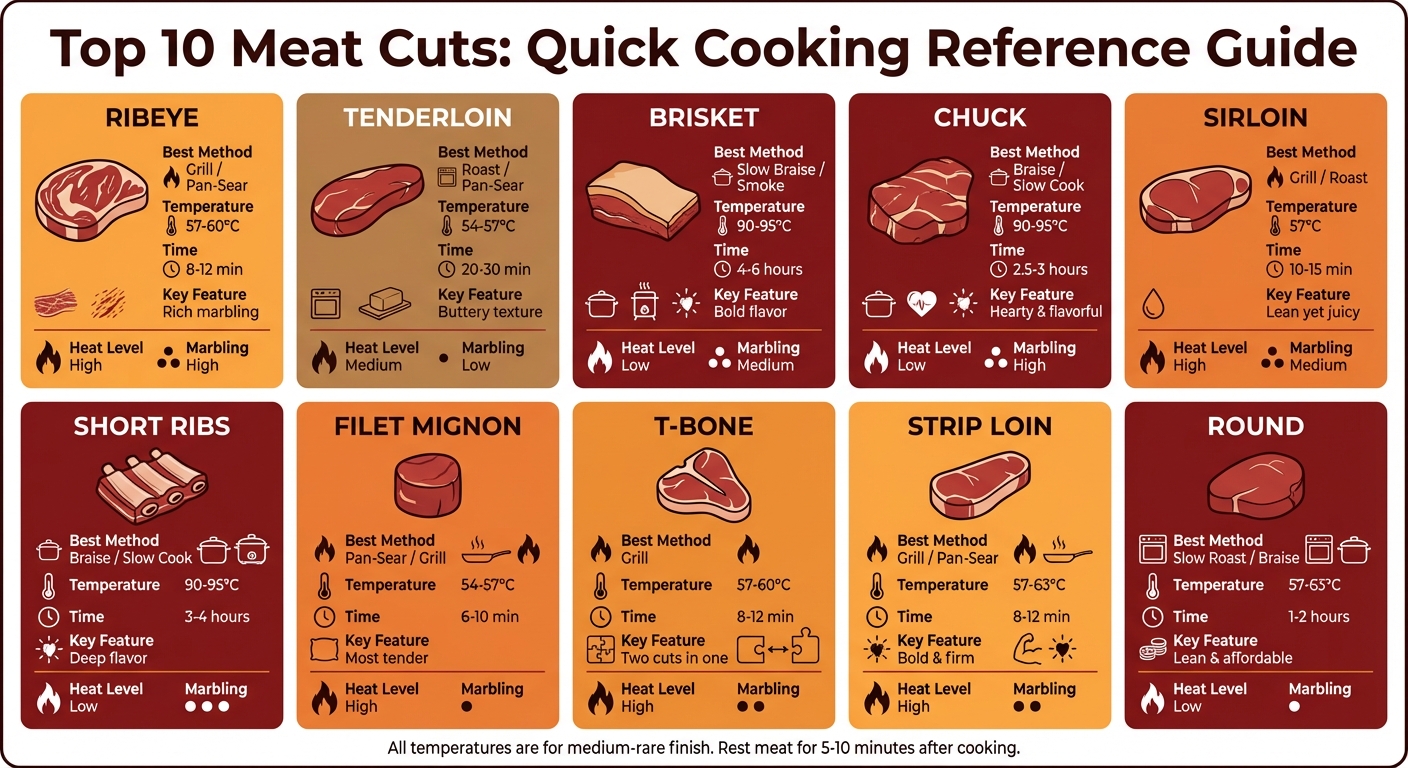
Meat Cuts Cooking Guide: Methods, Temperatures & Times
1. Ribeye
Flavour Profile and Marbling
Ribeye steaks, taken from ribs 6–12, are celebrated for their rich fat content and natural tenderness. Known for their heavy marbling - those white streaks of intramuscular fat - and a thick fat cap, ribeyes deliver exceptional flavour and juiciness as the fat melts during cooking. As BBC Good Food puts it:
"The special appeal of rib-eye steaks is that they have a rich marbling of fat throughout them, which gives guaranteed flavour and succulence".
While ribeye is slightly chewier than filet mignon, it remains a forgiving cut that holds onto its bold, beefy flavour during cooking.
Ideal Cooking Methods and Temperatures
Ribeye shines when cooked with high, dry heat. Grilling, pan-searing in a cast iron skillet, or broiling are excellent ways to create a crispy crust while keeping the interior juicy. For the best experience, aim for medium-rare, which means an internal temperature of about 57°C.
To prepare, let the steak sit at room temperature for 30 minutes before cooking. For a 2.5 cm thick steak, sear each side for 2 minutes, then rest it for 5–10 minutes to allow the juices to redistribute.
Practical Uses in Recipes
Ribeye is a star on its own but also works beautifully in other dishes. Thinly sliced ribeye adds a luxurious touch to Philly cheesesteaks, steak salads, or quick stir-fries. Thanks to its marbling, every bite stays tender and full of flavour. Just remember, overcooking can dull its richness, so keep an eye on the heat.
Sourcing Tips
When shopping for ribeye, look for cuts with a deep red colour and firm, creamy-white fat. Avoid pieces with yellowish fat or little visible marbling, as these may lack flavour and tenderness. For an even more indulgent experience, ask for the "Cap of Ribeye" (spinalis dorsi), a highly sought-after portion of the cut. Bone-in options like Tomahawk or Cowboy steaks not only make a dramatic statement but also add depth of flavour.
In the UAE, quality and traceability are especially important. Trusted suppliers like Fin & Bone in Al Barari, Dubai, offer premium ribeyes with a focus on sustainability and transparency. Their cuts come with full details on origin and preparation, ensuring peace of mind for discerning home chefs. Stay tuned as we dive into another cut that brings its own distinct character to the table.
sbb-itb-3031837
2. Tenderloin
Flavour Profile and Marbling
Tenderloin is celebrated as one of the finest and most luxurious beef cuts you can find. As Owton's Butchers puts it:
"The most tender cut of beef is the tenderloin, also known as fillet mignon or whole fillet of beef. Located along the spine, this muscle does minimal work, resulting in a buttery-soft, tender texture."
Unlike the bold, rich flavour of ribeye, tenderloin offers a more subtle and delicate beef taste. Its leanness and minimal marbling make it an ideal match for rich sauces like Béarnaise or peppercorn. Wrapping it in bacon is another popular choice, adding both moisture and flavour.
Ideal Cooking Methods and Temperatures
Tenderloin's low fat content means it can dry out quickly if overcooked. To make the most of this prized cut, sear it for 2–3 minutes per side to lock in flavour. For thicker roasts, a reverse sear works wonders: cook it at 110–135°C until the internal temperature reaches 54–57°C for medium-rare. Let it rest for about 5 minutes before serving. These methods help bring out tenderloin's delicate texture and versatility.
Practical Uses in Recipes
Tenderloin is a true showstopper for special occasions. It can be roasted whole for a stunning centrepiece, sliced into filet mignon steaks for an elegant main course, or cut into smaller medallions (Tournedos) for sophisticated appetisers. Its mild flavour makes it a perfect canvas for creative pairings, whether that's a classic peppercorn sauce or a fresh herb marinade.
Sourcing Tips
When shopping for tenderloin, opt for USDA Prime or Choice grades to ensure premium quality. Save yourself some prep time by asking your butcher to remove the "silver skin" - a tough connective tissue that doesn’t break down during cooking.
In the UAE, where quality and traceability are highly valued, Fin & Bone in Al Barari, Dubai, is a trusted source for premium tenderloin. They provide full transparency about the origin and preparation of their cuts, ensuring you get a product that's perfect for your finest home-cooked meals.
3. Brisket
Flavour Profile and Marbling
Brisket is all about boldness. Its rich, hearty, and deeply beefy flavour makes it a perfect match for strong seasonings like wood smoke, cracked pepper, and aromatic marinades. Cut from the lower chest, this meat is packed with connective tissue, thanks to the hard-working muscles in this area. When slow-cooked, that dense connective tissue breaks down beautifully, transforming into melt-in-your-mouth tenderness.
What makes brisket truly shine is its marbling and generous fat cap. It’s made up of two key muscles: the point, which is marbled and fatty, and the flat, which is leaner and has a more uniform thickness. When cooked slowly, the collagen melts and the fat renders, basting the meat from the inside. As Ivy Manning from The Kitchn puts it:
"Dense with a meltingly tender texture when cooked low and slow, brisket has a bold, meaty flavour that stands up well to smoking and corning".
The secret to brisket’s magic lies in mastering the low-and-slow cooking methods that unlock its potential.
Ideal Cooking Methods and Temperatures
Brisket thrives on patience. The key is low and slow heat, which allows the tough connective tissue to break down. For smoking, pitmasters suggest a temperature of around 107°C, though you can go up to 135°C if you’re in a hurry. The goal? An internal temperature of 96°C, where the meat becomes irresistibly tender.
For oven roasting, set your oven to 160°C and cook for about 5 hours. Using a slow cooker? Let it work its magic on low for 8–10 hours. Once cooked, let the brisket rest for 30–60 minutes to lock in all those juices. And when it’s time to serve, always slice against the grain - this step is crucial to achieving a tender bite rather than a chewy one.
Practical Uses in Recipes
Brisket’s versatility shines in the kitchen. The point cut is perfect for shredded beef or burnt ends, while the flat cut works wonders for sliced brisket or corned beef. Both cuts deliver a tender interior with a crisp, flavour-packed bark.
Sourcing Tips
Finding quality brisket is as important as cooking it right. In the UAE, top-notch brisket often comes from the US (look for USDA Prime or Choice grades) or Australia (Angus and Wagyu varieties). For the best marbling, USDA Prime or Australian beef with high marbling scores are excellent choices. If you’re after grass-fed options for a more sustainable choice, specialised butchers can help.
In the UAE, quality and traceability are priorities. For example, at Fin & Bone in Al Barari, Dubai, you’ll find premium brisket with full transparency about its origin. Whether you’re after a whole "primal" cut for a weekend barbecue or a smaller portion for braising, their team can guide you to the perfect choice for your cooking needs.
4. Chuck
Flavour Profile and Marbling
Beef chuck is celebrated for its bold, hearty flavour. Sourced from the hardworking neck, shoulder, and upper arm areas, this cut delivers a rich taste that pairs perfectly with strong seasonings and slow-cooking techniques.
What makes chuck so flavourful is its generous marbling and high collagen content. While the connective tissue can make the meat tough initially, it transforms into a tender, melt-in-your-mouth texture when cooked correctly. Emily Rahravan from America's Test Kitchen puts it best:
"The fat and collagen make the meat flavorful and tough, respectively, but give it loads of potential for turning meltingly tender during cooking".
Chuck’s 15–20% fat content also makes it a top choice for ground beef, creating juicy and flavourful burgers. But to truly enjoy chuck, it’s all about using the right cooking techniques.
Ideal Cooking Methods and Temperatures
Chuck shines when cooked low and slow. To achieve tender, flavour-packed results, keep the temperature above 60°C for long enough to allow the collagen to break down into gelatin. For oven-braising, set the oven at 163°C and cook for 3–5 hours. Make sure to seal the meat in a Dutch oven or wrap it tightly in foil to lock in moisture.
Before braising, don’t skip the searing step - brown the meat for 7–10 minutes to develop a deep, caramelised crust that boosts flavour. Always slice against the grain to shorten muscle fibres and improve tenderness. For tougher chuck steaks, an acidic marinade with ingredients like vinegar or citrus can help soften the meat. If grilling, aim for an internal temperature of around 63°C (medium) to keep the meat juicy while gently breaking down connective tissue.
Certain sub-cuts, such as the Flat Iron and Denver Cut, are exceptions. These cuts are tender enough for high-heat cooking methods like grilling or pan-searing. Just keep in mind that Flat Iron steaks benefit from being cooked to at least medium doneness to soften their connective tissue.
Practical Uses in Recipes
Chuck’s versatility makes it a go-to choice for countless recipes. The chuck-eye roast, for example, is a continuation of the ribeye muscle and offers similar flavour at a more budget-friendly price. It’s ideal for slow-cooking or braising. Ground chuck, with its balanced fat content, is perfect for juicy burgers, showcasing the cut’s adaptability for both whole and ground preparations.
In stews and pot roasts, chuck’s collagen-rich composition adds body and depth to the cooking liquid, something leaner cuts just can’t replicate. Flat Iron steaks are tender enough for quick, high-heat grilling, while boneless short ribs from the chuck deliver a silky, rich texture when braised. No matter the dish, chuck’s bold flavour and texture make it a true kitchen staple.
Sourcing Tips
Once you’ve mastered cooking chuck, finding high-quality cuts is the next step. In the UAE, you can easily find premium chuck through specialised butchers or online platforms. Look for pieces with consistent thickness and visible marbling. Avoid cuts with large clumps of hard fat or gristle, as these can affect the final texture.
For top-tier options, consider USDA Prime or USDA Choice beef, or Australian Wagyu from brands like Stone Axe and Margaret River. If you’re aiming for a leaner option with a smaller environmental impact, grass-fed beef is a great choice.
For expert advice, visit Fin & Bone in Al Barari, Dubai. Their team can guide you toward high-value sub-cuts like Flat Iron or Denver steaks, which offer excellent tenderness at a more affordable price. Whether you’re planning a weekend roast or weeknight burgers, sourcing from trusted suppliers ensures you get the best quality and transparency in your meat.
5. Sirloin
Flavour Profile and Marbling
Sirloin offers a rich, balanced beef flavour with a lean yet juicy texture. Cut from the loin just behind the ribs, it has fine, even marbling and a thin layer of fat along the edge. While it’s leaner than ribeye, it carries more flavour than fillet, making it a versatile choice for a variety of dishes. Its consistent shape and texture make it particularly well-suited for quick, high-heat cooking.
Ideal Cooking Methods and Temperatures
Sirloin shines when cooked quickly over high heat, such as grilling, pan-searing, or broiling. As noted by BBC Food:
"All sirloin cuts should be cooked quickly and over a high heat to maintain the tenderness and flavour so prized in these cuts."
Before cooking, let the steak sit at room temperature for about 45 minutes and season it generously with salt. For a medium-rare finish, aim to remove the steak from heat at 50–52°C; after resting for 5–10 minutes, it will rise to 54–57°C. Avoid pressing down on the steak while cooking, as this releases juices and compromises its moisture.
For thicker cuts, try a reverse-sear method: roast the steak at 107°C until the internal temperature reaches 46°C, then sear it in a hot pan for 2–3 minutes per side. Always slice against the grain to maximise tenderness. These techniques highlight sirloin's adaptability in the kitchen.
Practical Uses in Recipes
With its firm texture and bold flavour, sirloin works beautifully in a wide range of recipes. It’s a great fit for stir-fries, stroganoff, fajitas, salads, kabobs, and even spicy Sichuan dishes. Pair it with robust ingredients like garlic, rosemary, peppercorn sauce, or red wine marinades to enhance its natural taste. Whether you’re preparing a quick weeknight meal or a dish for guests, sirloin is a lean yet flavour-packed option.
Sourcing Tips
When shopping for sirloin in the UAE, look for cuts with light, even marbling, a vibrant red colour, and a clearly defined fat edge. It’s also helpful to distinguish between top sirloin, which is more tender and perfect for quick cooking, and bottom sirloin, which is tougher and better suited for roasting or braising.
For premium options in Dubai, consider visiting Fin & Bone in Al Barari. Their team provides expert guidance on selecting sustainably and ethically sourced sirloin with full traceability. Whether you're planning a weekend barbecue or a quick stir-fry, they ensure you’ll get high-quality meat that aligns with your values and culinary needs.
6. Short Ribs
Flavour Profile and Marbling
Short ribs are known for their bold, rich beef flavour that sets them apart from other cuts. Sourced from ribs 6 through 12 in the rib and plate sections, they boast plenty of intramuscular fat and connective tissue. This collagen-dense structure is what makes them so special - it breaks down during slow cooking, turning into gelatin that gives the meat a silky texture and incredible tenderness. Short ribs are particularly good at soaking up the flavours of cooking liquids, whether it’s red wine, soy sauce, or a fragrant stock. This makes them a fantastic choice for creating dishes with deep, layered flavours. However, to get the best out of this cut, slow and careful cooking is key.
Ideal Cooking Methods and Temperatures
For the perfect short ribs, start by searing them in a hot pan for about 45–60 seconds on each side to create a caramelised crust. After that, braise them at 140–160°C for 3–4 hours, aiming for an internal temperature of 90–95°C. This allows the collagen to fully break down. As Lauren Allen, Founder of Tastes Better From Scratch, explains:
"Braising is an excellent cooking method for tougher cuts of meat that will become tender after prolonged cooking!"
If you’re oven-braising, cook them covered at 180°C for 2 hours, then reduce the heat to 160°C for an additional 30–45 minutes. For a slow cooker, set it on low for 6–8 hours. If you’re pressed for time, an Instant Pot can do the job in 40–45 minutes on high pressure, followed by a 15-minute natural release.
Practical Uses in Recipes
Short ribs are a star ingredient in hearty, slow-cooked meals. They’re perfect for dishes like red wine braises, Korean Galbi (ideal with Flanken-style cuts), BBQ-glazed ribs, and rich beef stews. The English-style cut - thicker, rectangular pieces - is best suited for traditional braising, while Flanken-style ribs, which are thinner and cut across the bones, work well for grilling at high heat. Pair them with aromatics like thyme, rosemary, garlic, and bay leaves. For serving, consider rich sides like mashed potatoes, creamy polenta, or risotto, which complement their luxurious, sauce-laden flavours.
Sourcing Tips
When buying short ribs in the UAE, look for cuts with bright red meat and visible white marbling. Avoid any that appear grey or dull. Bone-in short ribs are the way to go for better flavour and an ideal meat-to-bone ratio. For high-quality, sustainably sourced short ribs in Dubai, check out Fin & Bone in Al Barari. They offer hormone-free, antibiotic-free options with full traceability and expert guidance to help you pick thick, meaty cuts that deliver exceptional taste while aligning with ethical sourcing practices.
7. Filet Mignon
Flavour Profile and Marbling
Filet mignon is celebrated as the pinnacle of tenderness. Taken from the tenderloin, this cut is known for its buttery texture. As Owton's Butchers describes:
"Located along the spine, this muscle does minimal work, resulting in a buttery‑soft, tender texture".
Unlike the heavily marbled ribeye, filet mignon is lean, with minimal intramuscular fat and only a thin layer along the edges. Its mild flavour makes it an excellent match for rich, flavourful sauces. The tenderness of this cut is so exceptional that it can often be sliced effortlessly with a fork. Due to the limited amount of tenderloin available per animal, filet mignon is a rare and highly sought-after cut, which contributes to its premium price.
Ideal Cooking Methods and Temperatures
Filet mignon requires careful cooking to maintain its delicate texture. With little fat or connective tissue to protect it, this cut cooks quickly and can dry out if overcooked. High-heat techniques like pan-searing in a cast-iron skillet or grilling are ideal for achieving a savoury crust while keeping the interior tender and juicy.
To prepare, season the steak with salt about 45 minutes before cooking and allow it to come to room temperature for 30 minutes. Sear the steak for about 2 minutes per side. For thicker cuts (around 5 cm or more), finish in a 215°C oven for 4–6 minutes. Aim for an internal temperature of 54–57°C for medium-rare. During the final minute of cooking, add butter, garlic, and fresh thyme to the pan to baste the steak, enhancing its flavour. Always let the steak rest for 5–10 minutes after cooking to allow the juices to redistribute.
Practical Uses in Recipes
Filet mignon shines in sophisticated dishes like Steak Diane or Filet Oscar. Wrapping the steak in bacon can add moisture and a smoky flavour to this lean cut. It’s also a classic choice for dishes like beef Wellington. Pair it with creamy sides like mashed potatoes or gratin dauphinois for a balanced and indulgent meal.
Sourcing Tips
When shopping for filet mignon in the UAE, look for cuts that are thick, uniform, and have a vibrant red colour with a fine-grained texture. Specialised butcheries like Prime Gourmet offer high-quality options, such as Australian Black Angus Beef Fillet Mignon starting at AED 78.00. For premium cuts with full traceability, consider Fin & Bone in Al Barari, Dubai, which provides hormone-free and antibiotic-free options sourced from trusted suppliers. Grass-fed beef from New Zealand is a great choice for those prioritising sustainable farming practices. If you prefer grain-finished beef for added juiciness, ask about marble scores - Angus or Wagyu fillets with scores of 4–5+ are excellent options.
For the best results, choose "centre-cut" or "Chateaubriand" for uniformity, or request "triple-trimmed" cuts to ensure all silver skin and excess fat are removed. Filet mignon’s versatility makes it a favourite among home chefs looking to experiment with high-quality cuts and elevate their culinary skills.
8. T-Bone
Flavour Profile and Marbling
The T-bone steak is a cut that delivers the best of both worlds. Recognisable by the T-shaped bone at its centre, this steak combines two distinct textures and flavours: the rich, beefy New York Strip on one side and the delicate, tender Filet Mignon on the other. The strip side boasts a bold, meaty flavour with moderate marbling, while the filet side is prized for its buttery softness. The bone itself plays a key role during cooking, helping the meat retain its moisture and enhancing the overall flavour. As Hunter & Barrel UAE puts it:
"The T-bone gives you both sirloin and eye fillet in one dramatic presentation. The bone helps to give a buttery flavour, while the marrow melts throughout to create something truly special".
This duality makes the T-bone a versatile choice, perfect for a variety of cooking styles.
Ideal Cooking Methods and Temperatures
T-bone steaks shine when prepared using high-heat methods like grilling, broiling, or pan-searing. However, because the lean filet side cooks faster than the strip, it's a good idea to position the filet side toward the cooler area of your grill to prevent overcooking. For the best results, season the steak with salt at least 45 minutes before cooking to enhance its flavour and create a beautiful crust.
For thicker T-bones (over 4 cm), a two-zone fire setup works wonders. Sear the steak over high heat for 3–4 minutes on each side, then move it to a cooler zone to finish cooking evenly. Use an instant-read thermometer to check the internal temperature, inserting it into the thickest part of the tenderloin. For medium-rare, aim for 54–57°C, letting the steak rest under foil for 5–10 minutes afterward. During this resting period, the temperature will rise slightly to around 57–60°C. To serve, carve the meat off the bone and slice it against the grain for the best texture.
Practical Uses in Recipes
When cooked with care, the T-bone steak becomes the star of any dish. A classic preparation is Bistecca alla Fiorentina, a thick T-bone grilled over charcoal and seasoned simply with salt, pepper, and olive oil. Thanks to its generous size, this steak is perfect for sharing. Standard portions typically weigh around 500 g, while larger "King Cuts" can go up to 1.4 kg. To elevate the flavours, pair it with a bold chimichurri or a rich compound butter. Serve alongside roasted vegetables or a fresh rocket salad tossed with lemon and olive oil for a balanced meal.
Sourcing Tips
For those in the UAE, high-quality T-bones can be found at specialised butchers like ButcherShop.ae and MLS UAE, as well as premium supermarkets such as Spinneys. Most T-bones available in the region are imported from Australia (including Angus and Wagyu varieties) or the USA (USDA Prime and Choice). When shopping, look for steaks that are 2.5 to 4 cm thick, with creamy white marbling on the strip side for added flavour. For Australian beef, a Marble Score (MS) of 4–5+ is a good indicator of quality. If sustainability is a priority, seek out labels like "Grass-Fed Beef" or "Organic", which are widely available through UAE meat suppliers.
For a premium experience, Fin & Bone in Al Barari, Dubai, offers top-tier, sustainably sourced options with full traceability from trusted suppliers. Many providers in Dubai also offer convenient delivery services, with same-day delivery for orders placed before 1:00 PM and even 3-hour express options in some cases.
9. Strip Loin
Flavour Profile and Marbling
The strip loin - often referred to as the New York Strip or Kansas City Strip - packs a punch with its bold, beefy flavour and firm texture. This cut comes from the short loin along the cow's back, an area that doesn't get much exercise, making the meat naturally tender. It features moderate marbling, with delicate white fat streaks running through the muscle and a fat cap that melts during cooking, keeping the steak juicy and enhancing its flavour. As Carversteak describes it:
"The striploin is a favorite among steak enthusiasts... offering the perfect balance of tenderness, flavor, and juiciness".
This combination of tenderness and flavour makes it perfect for high-heat cooking methods that bring out its rich character.
Ideal Cooking Methods and Temperatures
The strip loin shines when cooked with dry, high-heat techniques like grilling, pan-searing in a cast-iron skillet, or broiling. To achieve the best texture and flavour, aim for medium-rare (54–57°C) or medium (around 60°C). Using an instant-read thermometer ensures precision. Mahdi Jaber, Co-founder of The Meat Avenue, advises:
"New York strips are best cooked on a high flame and quickly. The meat must be flipped every 30 seconds to ensure an even sear".
After cooking, let the steak rest under foil for 5–10 minutes to lock in the juices, then slice against the grain for the best results. These steps mirror the care typically given to premium cuts like ribeye and sirloin.
Practical Uses in Recipes
This versatile cut works beautifully for classic steak dinners, steak au poivre, or centre-cut strip steaks. Keep in mind that end-cut pieces may have a visible nerve, which can make the meat slightly chewier.
Sourcing Tips
In the UAE, premium strip loin is readily available from specialised butchers like ButcherShop.ae and MLS UAE. Many of these cuts are imported from Australia (including Angus and Wagyu) or the USA (offering USDA Prime and Choice). For the best quality, look for USDA Prime or Australian Wagyu with marbling scores of MS 4–5+. USDA Prime strip loin consistently earns praise for its superior flavour and quality.
For a sustainable choice, opt for grass-fed or organic options from trusted UAE suppliers. Butchers often provide convenient delivery services, with same-day delivery available for orders placed before 1:00 PM and some offering 3-hour express delivery across Dubai. Fin & Bone in Al Barari, Dubai, is a standout option, offering premium, traceable strip loin sourced from reliable suppliers, ensuring both quality and sustainability.
10. Round
Flavour Profile and Marbling
The round cut comes from the hindquarters and leg muscles of the cow. It’s a lean cut with very little intramuscular fat and a fair amount of connective tissue. While it delivers a bold, beefy flavour, the low fat content means it can easily turn dry or chewy if not cooked with care. This cut is divided into two main sub-primals: the Top Round, taken from the inner thigh (slightly more tender), and the Bottom Round, which comes from the outer leg and is tougher with a tighter grain structure.
Ideal Cooking Methods and Temperatures
To keep the Top Round juicy, roast it to medium-rare (about 57°C). For the tougher Bottom Round, braising or stewing is the way to go. These methods help break down the connective tissue, resulting in a more tender texture. Hannah Mosquera, a butcher shop veteran, explains:
"By braising and stewing, you're actually overcooking the meat until it falls apart, which gives the illusion of tenderness when paired with lots of braising liquid or sauce instead of the dryness associated with overcooking meat."
For best results, slice round cuts thinly against the grain. If you’re roasting, marinate the meat for 4–8 hours using acidic ingredients like citrus juice or vinegar. This helps tenderise the tough fibres. These techniques bring out the best in round cuts, making them perfect for a variety of traditional dishes.
Practical Uses in Recipes
With the right preparation, round cuts can be incredibly versatile. Top Round is great for dishes like London Broil, roast beef, or even stir-fries. On the other hand, Bottom Round shines in slow-cooked recipes like pot roasts, Swiss steak, or any dish that benefits from extended cooking to achieve a fork-tender texture. The Eye of Round, though very lean, can be turned into an economical alternative to prime rib - often called the "poor man's prime rib" - when it’s seared and sliced thinly.
Sourcing Tips
In the UAE, round cuts are often sold under the label "Rump" and can be found at specialised butchers like The Meat Avenue or premium retailers such as Spinneys. Mahdi Jaber highlights the cost-effectiveness of round cuts, making them a smart choice for budget-conscious home cooks. For a slightly richer flavour and better marbling, look for grain-fed Angus or Wagyu options with marble scores of 6–7+. If sustainability is a priority, opt for organic or free-range varieties.
For traceable and responsibly sourced options, Fin & Bone in Al Barari, Dubai, offers premium-quality round cuts that balance value and sustainability. Choosing ethically sourced meat not only supports sustainable practices but also ensures you’re getting a high-quality product.
Beef 101: The Beginner's Guide to Every Cut of Beef
Cooking Methods Comparison Table
Here's an easy-to-follow guide to the best cooking methods, ideal temperatures, and sourcing details for various cuts of meat.
| Cut | Best Cooking Method | Internal Temp (°C) | Cooking Time | Sourcing at Fin & Bone |
|---|---|---|---|---|
| Ribeye | Grill / Pan-Sear | 57–60°C | 8–12 min (2.5 cm steak) | Premium grain-fed and Wagyu options available at the Al Barari store |
| Tenderloin | Roast / Pan-Sear | 54–57°C | 20–30 min (whole) | Whole tenderloins and filet cuts; free shipping on orders over AED 300 |
| Brisket | Slow Braise / Smoke | 90–95°C | 4–6 hours | Grass-fed and grain-fed varieties; check weekly specials for deals |
| Chuck | Braise / Slow Cook | 90–95°C | 2.5–3 hours | Economical cuts ideal for stews; loyalty programme offers discounts |
| Sirloin | Grill / Roast | 57°C | 10–15 min (2.5 cm steak) | Top and bottom sirloin cuts; use code WELCOME10 for 10% off your first order |
| Short Ribs | Braise / Slow Cook | 90–95°C | 3–4 hours | Bone-in and boneless options; traceable sourcing from trusted suppliers |
| Filet Mignon | Pan-Sear / Grill | 54–57°C | 6–10 min (2.5 cm steak) | Premium centre-cut tenderloins; available at the butcher's counter |
| T-Bone | Grill | 57–60°C | 8–12 min (2.5 cm steak) | Bone-in steaks with dual textures; sustainably sourced options |
| Strip Loin | Grill / Pan-Sear | 57–63°C | 8–12 min (2.5 cm steak) | New York strip cuts; newsletter subscribers get access to weekly deals |
| Round | Slow Roast / Braise | 57–63°C | 1–2 hours | Top and bottom round (rump); sustainably sourced premium cuts available |
These temperatures are ideal for achieving medium-rare steaks and tender, slow-cooked dishes. After cooking, let your meat rest for at least 6 minutes to allow the juices to redistribute evenly. For precise results, use a digital meat thermometer to monitor internal temperatures.
Fin & Bone is dedicated to providing premium, responsibly sourced meats for home chefs in the UAE. Their Al Barari store features expert butchers who can offer advice on cuts and cooking methods. Take advantage of their loyalty programme discounts, weekly specials, and free shipping on qualifying orders for a rewarding and sustainable shopping experience.
Conclusion
Mastering these ten cuts can completely transform your home cooking. Understanding that tender cuts like ribeye and filet mignon shine with quick, high-heat methods, while tougher cuts like brisket and chuck require slow, patient cooking, ensures you avoid the pitfalls of dry or chewy results. This knowledge allows you to pair the right cut with the perfect cooking technique, making every dish packed with flavour and texture. And when you combine this precision with high-quality ingredients, the results are unmatched.
In the UAE, traceable sourcing plays a huge role in meat quality. Premium meats often come with specific grain-fed durations - ranging from 120 days for standard fillets to up to 450 days for premium Wagyu ribeye. These feeding practices directly influence the marbling and richness of the meat, making sourcing just as important as your cooking method.
For home chefs seeking the best, Fin & Bone’s Al Barari store offers a range of sustainably sourced, premium meats. Their skilled butchers are on hand to help you choose the perfect cut for any recipe, whether it’s a quick midweek grill or a slow-cooked weekend feast. Plus, their loyalty programme, weekly deals, and free shipping on orders over AED 300 make it even easier to stock your kitchen with top-tier cuts.
With the right cuts and premium meats at your disposal, your everyday meals can reach a whole new level.
FAQs
What are the best ways to cook different types of meat cuts?
Cooking meat to perfection depends heavily on the cut you're working with. Each type of cut has its ideal cooking method to bring out its best flavour and texture.
For tender cuts like tenderloin or ribeye, quick, high-heat methods are the way to go. Grilling, roasting, or pan-searing not only lock in their natural juices but also create that irresistible golden crust that everyone loves.
When it comes to tougher cuts like brisket or chuck, slow-cooking is your best friend. Techniques like braising or stewing gently break down collagen and connective tissues, transforming the meat into a melt-in-your-mouth experience.
For thicker cuts, sous vide or reverse searing can be game-changers. These methods give you precise control over temperature, ensuring the meat cooks evenly and reaches the perfect level of doneness. To get the most out of your dish, always match your cooking method to the cut's fat content, thickness, and tenderness. It’s all about finding the right balance for mouth-watering results.
What should I look for when buying high-quality meat in the UAE?
To find top-notch meat in the UAE, start by selecting trusted suppliers or butchers who specialise in certified halal options and premium cuts like Wagyu or Angus. Pay attention to freshness indicators: the meat should have a vibrant colour, a firm texture, and a clean, neutral aroma. Also, check that it has been stored and transported under proper food safety guidelines, whether chilled or frozen.
Familiarising yourself with meat grading systems can make a big difference. Cuts with good marbling and a balanced fat distribution not only offer better flavour but also ensure tenderness. Sticking to reliable vendors helps guarantee that the meat aligns with your quality standards and works perfectly for your recipes.
What determines the flavour and tenderness of different meat cuts?
The taste and tenderness of a meat cut are influenced by several factors, including its location on the animal, fat distribution, and how it's prepared. Cuts from muscles that are frequently used - like the shoulder (chuck) or leg (round) - tend to have a stronger flavour but are less tender due to higher amounts of connective tissue. These cuts shine when cooked slowly, as the prolonged heat breaks down collagen, resulting in a more tender texture.
In contrast, cuts from less-used muscles, such as tenderloin or sirloin, are naturally tender with little connective tissue. These are ideal for quick cooking methods like grilling or pan-searing. Another important factor is marbling, those streaks of fat within the meat. More marbling means more flavour and juiciness. Techniques like dry-aging can also elevate the texture and flavour by breaking down muscle fibres over time.
By understanding these details, you can confidently pick the right cut of meat to match your recipe and cooking method, ensuring a delicious, tender dish every time.


